
Tung Oil Plasticizers Offer a Bio-Based Alternative for Flexible PVC
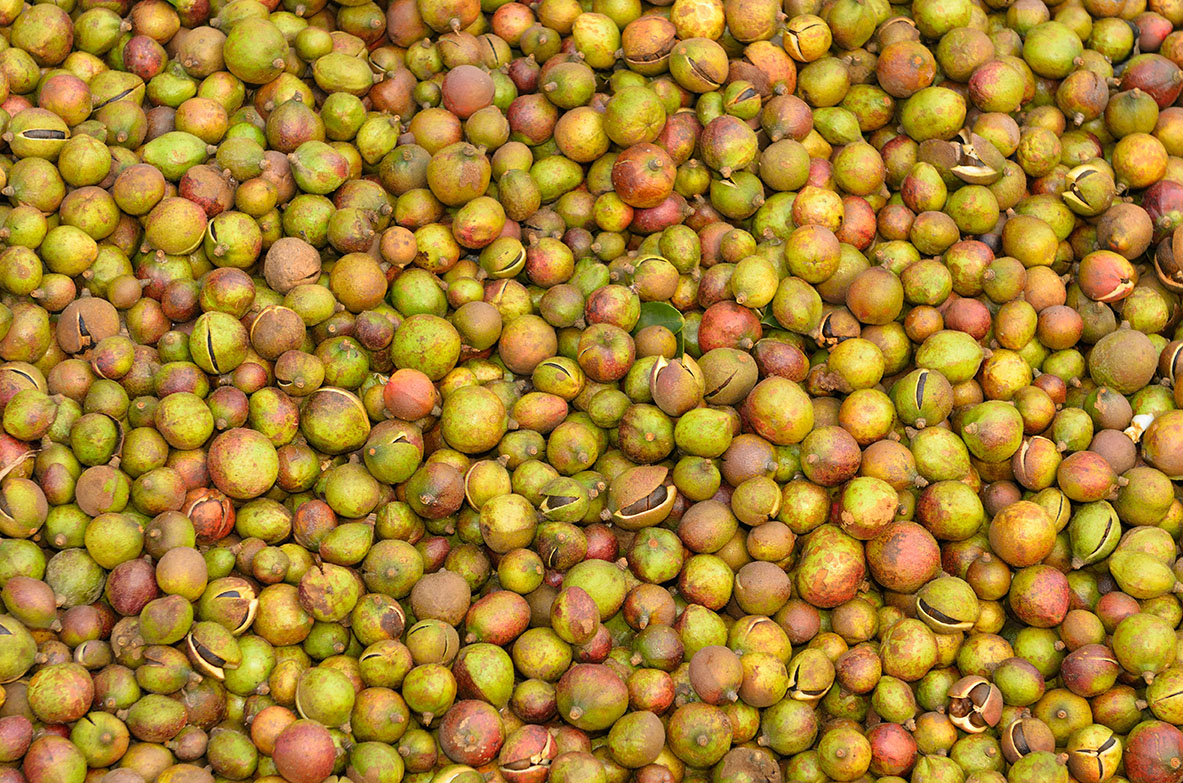
Tung oil plasticizers upgrade PVC elongation and durability. Manufacturers cut reliance on toxic phthalates while boosting industrial mechanicals.
Polyvinyl chloride (PVC) dominates the plastics industry, but its natural rigidity demands chemical intervention. Historically, manufacturers relied heavily on di(2-ethylhexyl) phthalate (DEHP) and dioctyl phthalate (DOP) to impart flexibility. However, mounting environmental and toxicity concerns force producers to seek sustainable alternatives. To solve this engineering problem, materials scientists manipulate polymer physics using novel bio-based plasticizers.
You can also read: Enzyme-Activated PVC: Redefining Vinyl’s End-of-Life Pathway
By designing molecules with specific polar and nonpolar structural elements, engineers disrupt the dense crystalline regions of the PVC matrix. The nonpolar chains wedge between polymer chains, while the polar segments attach reversibly to the PVC backbone. This mechanism expands the internal free volume, granting the molecular chains the space they need to slide past one another and transforming a rigid plastic into a flexible, functional material.
Architecting the Perfect Plasticizer
To replace legacy phthalates effectively, a new plasticizer must mimic their precise mechanical behavior without introducing new manufacturing bottlenecks. Chemists recently investigated how dicarboxylic acid structures influence the plasticizing ability of ester derivatives. They found that optimizing the molecular geometry dictates the ultimate technological and operational characteristics of the resulting PVC compounds. A successful bio-based plasticizer requires a branched or multi-chain architecture to maximize interaction with the PVC network. These structural parameters bind the plasticizer to the polymer, preventing the additive from migrating out over time and degrading product quality. When engineers dial in the correct molecular weight and chain flexibility, they achieve the necessary low-temperature performance and prevent the plastic from becoming brittle in harsh commercial environments.
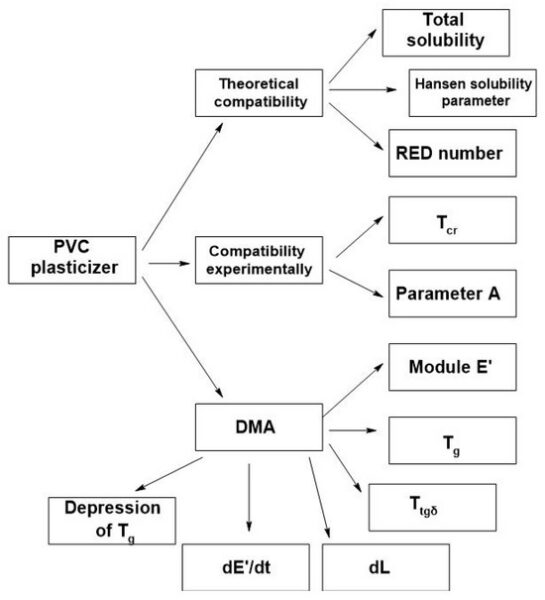
General scheme of methods for studying esters. Courtesy of The Effect of Dicarboxylic Acid Structure on the Plasticizing Ability of Its Ester.
Tung Oil Derivatives Enter Production
Building on these molecular principles, researchers synthesized a new auxiliary plasticizer: ketalized tung oil butyl levulinate (KTBL). They derived this compound from methyl eleostearate, a natural component of tung oil, and reacted it with butyl levulinate. The resulting molecule features a ketone structure, an ester base, and a long linear aliphatic chain. This unique chemical profile makes KTBL highly compatible with the PVC matrix, ensuring smooth blending. Manufacturers can use KTBL as an auxiliary plasticizer, mixing it directly with conventional dioctyl-phthalate (DOP) to drastically reduce overall phthalate consumption. Because this bio-based alternative mimics the flow characteristics of traditional chemicals, plant operators can adopt it without overhauling their existing extrusion or molding equipment, saving significant capital expenditure.
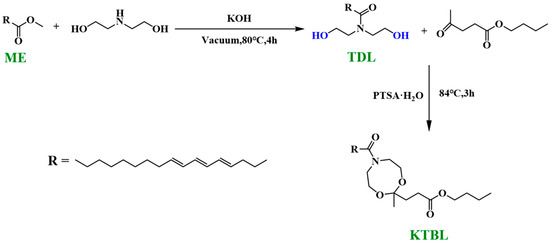
Synthesis of plasticizer KTBL. Courtesy of Synthesis and Properties of a Novel Levulinic Acid-Based Environmental Auxiliary Plasticizer for Poly (vinyl chloride).
Quantifying Mechanical Enhancements
To validate industrial viability, testing teams evaluated the mechanical properties of PVC blended with different plasticizer ratios. For example, they measured elongation at break to understand how far the material could stretch before failing under stress.
| Plasticizer System | Elongation at Break |
| Pure PVC | 40% Approx. |
| 100% Pure DOP | 377.47% |
| 1:1 KTBL to DOP Blend | 410.92% |
Comparison of elongation at break between pure PVC and different plasticizer systems. Adapted from Synthesis and Properties of a Novel Levulinic Acid-Based Environmental Auxiliary Plasticizer for Poly (vinyl chloride)
The data clearly demonstrate that replacing half of the conventional DOP with the bio-based KTBL yields superior mechanical flexibility. Manufacturers gain a more ductile product while reducing reliance on toxic additives. Furthermore, developers observed significant improvements in long-term durability and resistance to degradation as they increased KTBL content.
These bio-based plasticizing technologies offer a clear commercial advantage for modern polymer processors. Manufacturers can produce high-performance, flexible PVC that meets strict environmental regulations by integrating engineered tung oil derivatives and optimizing dicarboxylate structures. This drop-in solution requires minimal factory retooling, allowing facilities to immediately improve material durability and elasticity. As regulatory pressure against traditional phthalates intensifies, sustainable auxiliary plasticizers offer the plastics industry a scalable, profitable path forward.

Andres Delgado is a mechanical engineer specializing in design and quality assurance, with experience in precision seal design, turbomachinery maintenance, and orthopedic medical devices. He currently works as a Design Quality Engineer focused on New Product Introductions for knee implants and compliance with advanced manufacturing standards.