
From PhD Research to ASTM Standard: Apoorva Kulkarni Advances Aquatic Biodegradation Testing

Apoorva Kulkarni’s doctoral research helped shape ASTM D8646-26, which estimates temperature-dependent biodegradation behavior in aquatic environments.
Marine biodegradation tests help researchers measure whether plastics break down under controlled laboratory conditions and how much. However, another question remains harder to answer: how long might those materials persist once they reach colder aquatic environments?
ASTM D8646-26 addresses that gap by adding a kinetic framework that accounts for temperature when interpreting biodegradation results. Instead of treating biodegradation as one static result, the methodology estimates biodegradation time within an experimentally tested temperature range. For Apoorva Kulkarni, senior research engineer at Saint-Gobain, that methodology began with an unexpected question during her doctoral research.
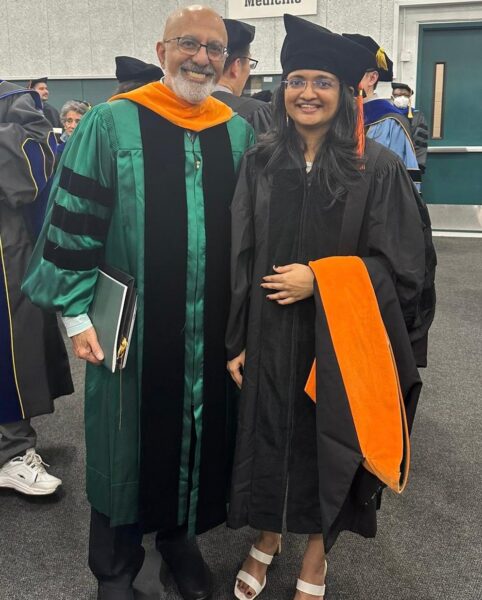
Apoorva Kulkarni completed her PhD under Prof. Ramani Narayan, with research that helped shape ASTM D8646-26 for aquatic biodegradation testing.
“I started my work with no intention of developing an ASTM methodology,” Kulkarni said.
Instead, she noticed results that did not make sense, asked why, and followed the science toward standard development.
You can also read: How to Test for Chemical Resistance in Plastic Components.
Inconsistent Data Raised a Bigger Question
Kulkarni’s doctoral research included developing value-added applications using biobased polymers, including starch, cellulose, PLA, and PHBV-type materials.
While comparing her biodegradation results with published studies, she noticed substantial variability among results for similar polymers.
Therefore, she examined the experimental conditions more closely and found that researchers often conducted tests at different temperatures. However, many studies did not systematically control or evaluate temperature as a factor affecting biodegradation rate. That observation led Kulkarni and her PhD advisor, Ramani Narayan, to question whether testing methods overlooked a fundamental parameter. Kulkarni then conducted experiments at controlled temperatures and applied kinetic analysis to understand how biodegradation rates changed. The experiments revealed a clear relationship between temperature and biodegradation rate, strengthening the case for a broader methodological framework. As they presented the findings to researchers and industry, they repeatedly heard that temperature had received limited attention. Consequently, the work moved beyond one doctoral research question and gradually evolved into a framework suitable for standardization.
Why Temperature Changes Biodegradation Rates
Many chemical engineers working with reaction kinetics will already be familiar with the scientific principle behind the methodology.
Kulkarni points to the Arrhenius relationship, which describes how temperature affects a chemical reaction rate.
In general, higher temperatures accelerate reactions, while lower temperatures slow them, although the exact relationship depends on the system. Biodegradation follows this principle because microorganisms ultimately convert carbon from the polymer into carbon dioxide through biological processes.
“If biodegradation is happening at 30 degrees Celsius versus 10 degrees Celsius, we would expect the rate to be different,” she said.
That difference matters most when researchers use laboratory results to predict material behavior in oceans and waterways. Laboratories may conduct biodegradation tests at temperatures much warmer than those found across many natural aquatic environments. Therefore, a polymer that biodegrades quickly in the lab may persist much longer when environmental temperatures drop.
“If we want to understand how this polymer will actually behave in an ocean environment, we cannot simply test at 30 degrees,” Kulkarni said.
Instead, researchers must account for temperature differences when interpreting how laboratory results may relate to colder conditions.
What ASTM D8646 Adds to ASTM D6691
ASTM D8646 does not replace ASTM D6691; instead, the two standards provide complementary pieces of the biodegradation assessment.
- ASTM D6691 remains the experimental foundation and provides biodegradation data, including measurements based on carbon dioxide evolution.
- ASTM D8646 then applies kinetic analysis to those results and estimates biodegradation time at defined temperatures.
Therefore, the new standard adds an important time-and-temperature dimension to data generated through conventional biodegradation testing. D6691 shows how biodegradation proceeds under specified test conditions, while D8646 examines how temperature influences that rate. For plastics engineers, that distinction changes the question they can ask when evaluating a material. Instead of asking only whether biodegradation occurred, engineers can examine how quickly the process may proceed as temperatures change. That information can then support estimates of persistence under other temperatures covered by the experimental model.
A Stronger Basis for Biodegradability Claims
The methodology could also help companies communicate biodegradation performance with greater precision and stronger scientific support. Kulkarni cautioned against assuming that laboratory biodegradation times will translate directly to the same timeline in ocean environments. For example, a material biodegrading within a certain number of days in the laboratory may behave differently at lower temperatures. ASTM D8646 provides a stronger framework for connecting temperature, biodegradation rate, and estimated biodegradation time.
Participants across the plastics value chain could use that information to make different development and evaluation decisions. Resin producers could assess how materials intended for possible aquatic exposure behave across several experimentally supported temperatures. Meanwhile, compounders and converters could study whether fillers, pigments, or additives affect both biodegradation degree and biodegradation rate. Brand owners could also gain more quantitative information about product persistence under specific environmental temperature conditions. Together, these applications could support more informed material decisions while reducing broad assumptions based only on accelerated laboratory tests.
The Standard Does Not Replicate Nature
Although D8646 improves interpretation of laboratory data, it does not reproduce every factor found in natural aquatic environments. Kulkarni emphasized that the methodology still relies on a model developed from controlled experimental observations. Temperature matters, but nutrient availability and microbial communities can also influence how biodegradation proceeds in different environments. Therefore, users should not treat temperature as the only variable controlling biodegradation behavior outside the laboratory.
The standard also places clear limits on how researchers can apply the kinetic model to other conditions. D8646 permits interpolation within the experimentally tested temperature range, but it does not allow unrestricted extrapolation beyond that range. That limitation keeps estimates tied to the experimental evidence supporting the model rather than extending predictions beyond validated conditions. Kulkarni also cautioned against treating biodegradation rate as a complete measure of environmental performance.
“Biodegradation time or rate itself does not tell you everything about how the environmental impact is,” she said.
Researchers must also consider other concerns, including aquatic toxicity and whether degradation releases harmful substances into the environment. Therefore, faster biodegradation should not automatically be interpreted as proof of lower environmental impact.
From a Research Question to an Industry Tool
Kulkarni initially wanted to understand why her experimental results differed from values reported elsewhere in the scientific literature. However, that question eventually led her toward temperature-dependent kinetics and a methodology for estimating biodegradation time. Seeing that work contribute to an ASTM standard has made the outcome especially meaningful for her.
“For me, I think that’s what research is supposed to really do,” Kulkarni said. “We start with a question, generate some new understanding, and then translate that understanding into something useful or practical.”
Still, she views D8646 as a starting point rather than a complete answer to marine biodegradation questions. Natural aquatic environments remain complex, and researchers still need to study how biodegradable materials behave beyond controlled laboratory conditions. Nevertheless, the standard gives industry a stronger framework for connecting laboratory results with temperature-dependent biodegradation behavior. For plastics companies facing growing scrutiny around environmental claims, that added rigor may become one of D8646’s most valuable contributions.

Juliana Montoya is Director of Content for Plastics Engineering. A mechanical engineer with an MSc in materials engineering, she has experience as a sustainability and packaging consultant focused on ecodesign and recycling. Her work centers on technical content for the plastics industry, connecting polymer innovation, manufacturing trends, and sustainability strategy for industry audiences.