New German Project Uses AI and Batch Data to Improve PCR Quality
AI sorting, data-driven compounding, and digital traceability improve PCR purity, consistency, and confidence across recycling value chains.
One of the main challenges in plastics circularity is producing large volumes of clean, high-purity waste streams. A new German project, called SoliD-Q, is exploring how AI-assisted sorting can work alongside data-driven compounding and digital quality verification to improve recycled-material performance.
Object-Based Sorting Targets Higher-Quality PCR
Sorting by polymer family alone is not always enough. Two products may both be made from HDPE, for example, but their previous applications, additives, contamination levels, and processing histories can affect recyclate quality.
For this reason, the project focuses on developing waste streams based not only on resin type, but also on product application. At the same time, it captures information from sorting, processing, and quality-control stages to improve traceability across the recycling chain.
You can also read: Computational Approaches to Fast-Track Material Development
This approach is described as object-based sorting. Instead of separating only by polymer type, the system identifies specific products and directs them into more targeted recycling streams. By combining these sorting decisions with process and quality data, the project aims to preserve material purity while creating more consistent recyclate grades.
From Waste to Data
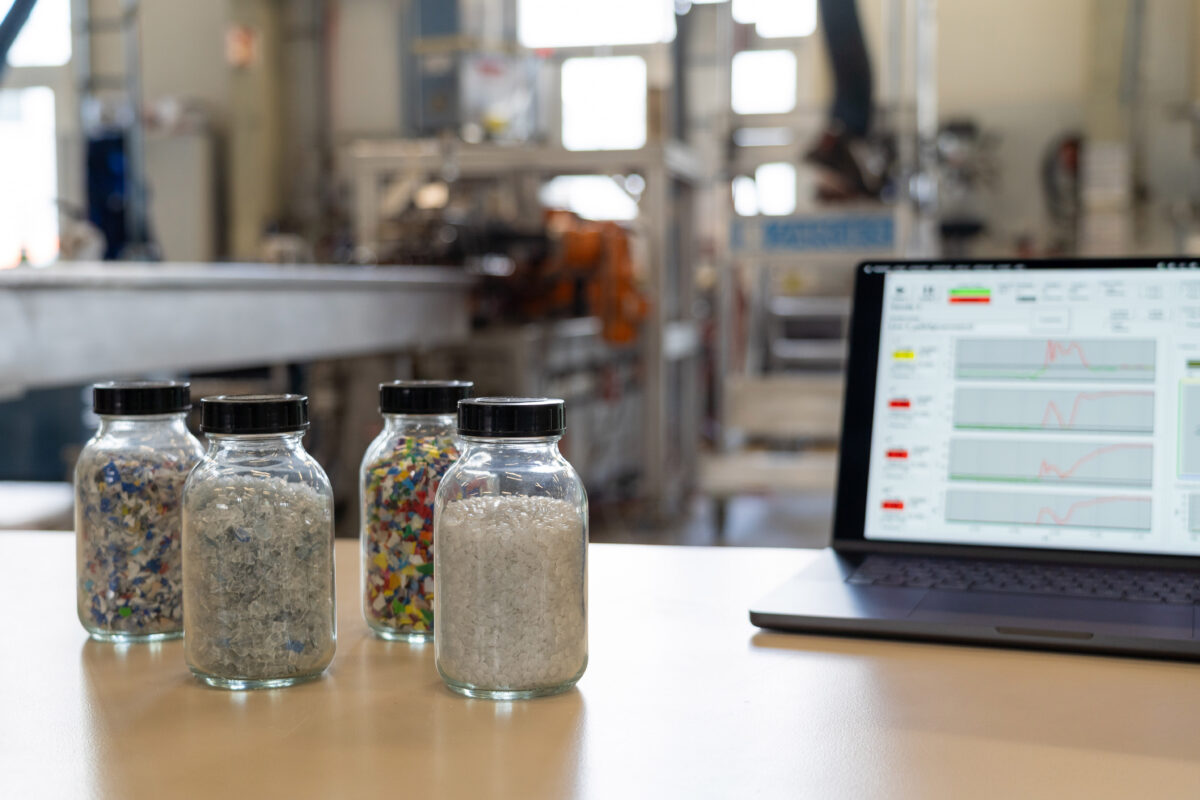
SoliD-Q integrates sorting, processing, and quality information across the value chain. The goal is to produce high-purity PCR materials with batch-specific properties and a corresponding digital fingerprint.
Three partners contribute different technologies to the project.
WeSort.AI is developing AI-based object recognition to sort plastic waste according to product type. Hoffmann + Voss uses the resulting material fractions to produce recycled compounds. SKZ is developing the digital infrastructure needed to track process and quality information throughout the system.
“Through object-based sorting, we reliably separate, for example, HDPE shampoo bottles from food packaging made of the same material,” says Johannes Laier, Managing Director of WeSort.AI. “This results in high-purity fractions with clearly defined product quality.”
However, object recognition must work under real recycling conditions.
“A key challenge is training the system to reliably recognize packaging despite contamination and deformation,” Laier adds.
This distinction could become increasingly important for applications that require more consistent recycled feedstocks. By separating products by previous use, recyclers can reduce variability within each material stream.
Data-Driven Compounding Improves Consistency
The second partner, Hoffmann + Voss, uses sorting data to optimize compounding. Instead of treating every recycled batch as identical, processors can use information about the incoming material to adjust compounding parameters. This data-driven approach aims to improve process stability and generate more consistent recycled compounds. Optimized processing conditions can also improve the economics of mechanical recycling by reducing variability, unnecessary processing, and off-spec material.
The approach therefore connects upstream sorting directly with downstream processing. Rather than evaluating material quality only after compounding, recyclers can use earlier process data to make better processing decisions.
Building a Digital Quality Fingerprint
SKZ provides the third part of the system by developing digital traceability and quality verification.
“It is crucial to view all available data holistically and to reliably capture fluctuations in material properties,” says Mingo Kübert, Digitalization Scientist at SKZ.
The platform combines process information with quality data to create a digital certificate for each material batch. The project also stores this information in an infrastructure designed to support digital product passports. This allows recyclers and downstream users to access traceability information, support auditing, and help protect data integrity. Because the information can be available in real time, manufacturers may also gain greater visibility into changes in material quality during production.
New Quality Standards for Recycling
Traditional laboratory testing often provides only isolated snapshots of material quality. SoliD-Q instead aims to collect information continuously for individual production batches. This approach can provide more consistent and traceable information about recycled-material properties.
For converters and brand owners, that transparency could help reduce uncertainty when incorporating PCR into demanding applications. It can also improve confidence in supplier claims and provide stronger documentation for quality-control and regulatory requirements.
Ultimately, the project shows how recycling quality may increasingly depend on a combination of physical processing and digital information.
AI can improve how recyclers identify and separate waste. Data can then guide compounding conditions, while digital traceability can document the resulting material quality. Together, these tools could help mechanical recyclers move from broadly defined recycled streams toward more application-specific PCR grades with greater consistency, traceability, and commercial value.

Laura Florez is a mechanical engineer and holds a PhD in plastics processing. She has worked as an editor in the plastics industry for over 25 years and has experience in research, training, and consulting. Her main fields of expertise are injection molding and plastics recycling.