
Xenia HM Upgrade Boosts Carbon Fiber Composite Stiffness
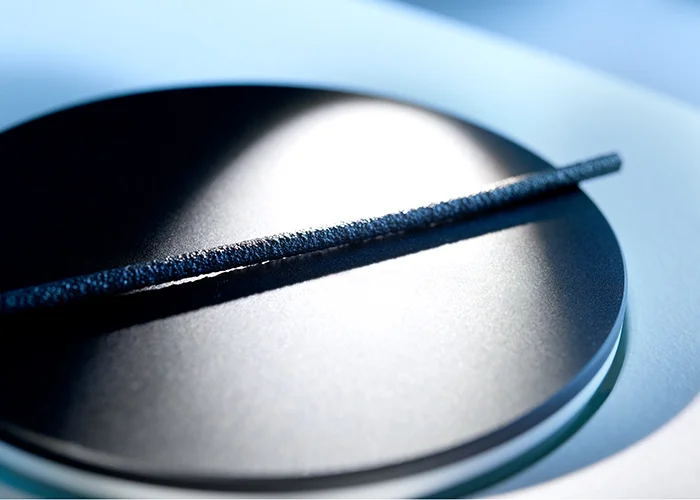
Xenia’s HM Upgrade improves carbon fiber-reinforced thermoplastics with higher stiffness, strength, impact resistance, and dimensional stability.
Nowadays, industries increasingly demand lighter, stiffer, and more durable materials for high-performance ends. This is why carbon fiber–reinforced thermoplastics have become the cornerstone of modern engineering. Nevertheless, as performance approaches the maximum thresholds, the material’s basis is no longer sufficient. With the introduction of its HM (High Modulus) Upgrade technology, Xenia Materials is addressing this challenge. Researchers redefine carbon fiber at its core to demonstrate how engineers manipulate stiffness and structural response within thermoplastic composites.
You can also read: Confronting the Challenges of Carbon Fiber Recycling
Engineering Stiffness at the Fiber Level
At the core of the HM Upgrade lies a straightforward but impactful concept: replacing standard carbon fibers with high-modulus variants to enhance stiffness without increasing weight. The result is a new application across the carbon fiber-reinforced material XECARB portfolio that delivers a measurable boost in mechanical performance. According to Xenia, this technology can increase tensile modulus by approximately 15% compared to conventional formulations, while maintaining the same density
By offering superior precision and dimensional stability, this technology unlocks an innovative design potential for components that must maintain mechanical integrity under demanding load conditions. Xenia also notes that this technology can increase impact resistance by 20% and tensile strength and flexural modulus by 15%, while preserving its lightweight nature. Engineers assessed the impact strength under demanding operating conditions and demonstrated consistently improved mechanical behavior at both -30°C and +23°C. This balance is critical.
In structural applications, improving stiffness typically comes at the expense of weight or processability. HM Upgrade avoids this trade-off, preserving the intrinsic lightweight advantages that define carbon fiber–reinforced thermoplastics.
Lightweighting for Real-World Applications
The enhanced properties of HM-enabled composites make them particularly suited for demanding applications where stiffness-to-weight ratio is critical. These include industries from aerospace and motorsport, where lightweight, stiffness, and dimensional stability are key, to demanding industrial and sports applications requiring impact resistance, structural reliability, and consistent performance over time.
In each case, the ability to maintain dimensional stability and mechanical strength under high loads provides a clear advantage over traditional materials, including metals and standard thermoplastics.
Expanding the Design Portfolio
The HM Upgrade integrates across a wide range of polymer matrices, including PA6, PA66, PPA, PP, PA11, and PA12 allowing engineers to tailor material performance to specific application requirements. Xenia positions HM Upgrade as part of a broader modular strategy. The company’s portfolio includes the XECARB materials in their original formulation, the user can customize the material with the selected UPGRADE to boost targeted performance. Within these options there is the Super Tough (ST) for impact resistance and Super Light (SL) for density reduction.
The company states that this versatility enables the development of high-performance applications across diverse industries. Engineers at Xenia reflect a broader industry shift with this approach displaying that materials selection does not only rely in polymer type, but by engineered systems that balance stiffness, toughness, weight, and processability. For designers, this opens new possibilities in applications where rigidity, dimensional stability, and predictable behavior under load are essential.
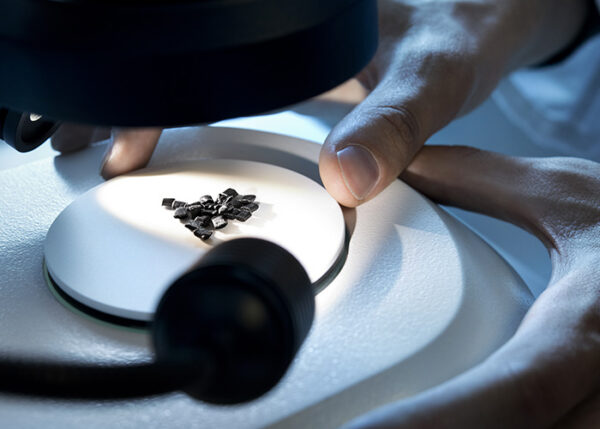
XECARB® thermoplastic composites family represents the range of products that achieve the highest mechanical features, together with low density and electrical conductivity. Courtesy of: Xenia Thermoplastics Specialties.
Implications for the Plastics Industry
Xenia’s HM Upgrade opens the door for a broader transformation in the plastics value chain, as innovation can occur at the intersection of materials science and engineering design.
With this, key trends emerge:
- Performance gains rely on fiber-level engineering, not just polymer selection.
- Lightweighting requires multi-property optimization, not single improvements.
- Modular material platforms are replacing one-size-fits-all solutions.
- Thermoplastic composites continue to expand into structural applications traditionally dominated by metals.
As industries push for higher efficiency and sustainability, the demand for stronger, lighter, and more adaptable materials will only intensify.

Daniela Castaño is a mechanical engineer specializing in automotive and motorsport engineering, with experience in material testing, vehicle performance, advanced manufacturing, and emerging transportation systems.