
What Makes a Bio-Based Coating Commercially Viable?
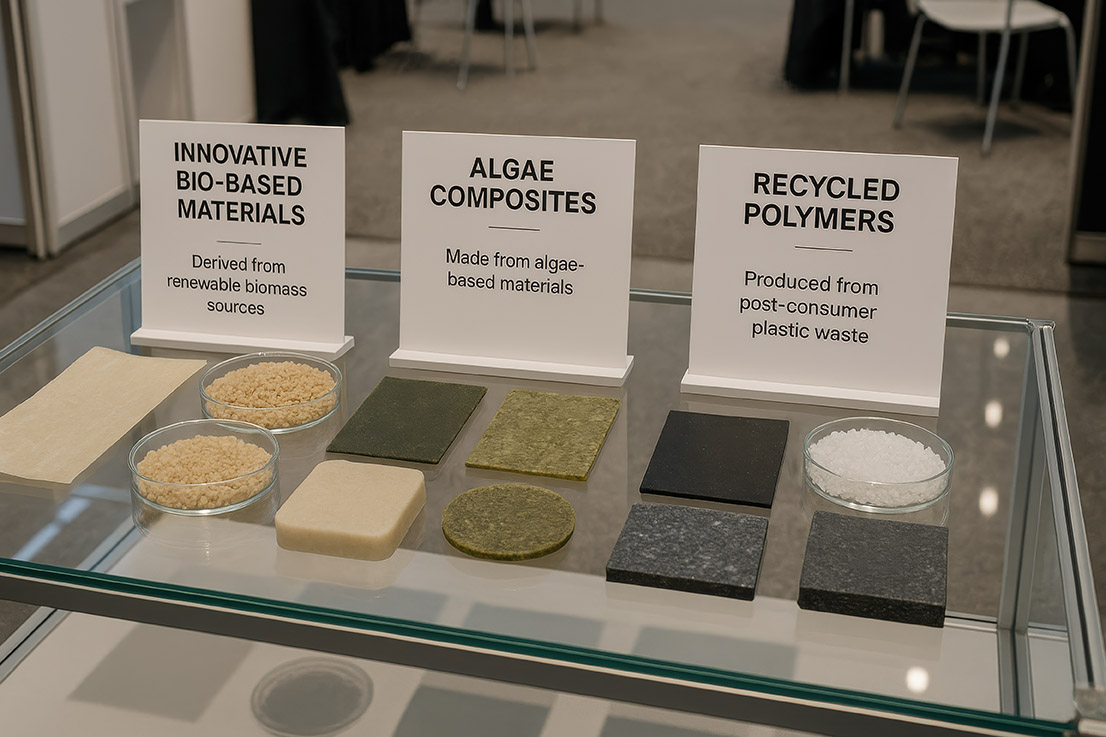
Bio-based coatings use plant oils, lignin, cellulose, and starch to improve sustainability, durability, adhesion, and industrial performance.
The coatings industry has reduced volatile organic compounds, improved curing technologies, and expanded the use of waterborne formulations over the past several decades. Yet most commercial coating systems still depend heavily on petroleum-derived raw materials.
You can also read: Renewable Functional Coatings for Advanced Applications
As manufacturers seek renewable alternatives, bio-based coatings have emerged as a promising area of development. The challenge is no longer identifying renewable feedstocks. The challenge is converting those feedstocks into coating materials that meet the durability, adhesion, and processing requirements of industrial applications. Recent research suggests that advances in chemical modification and biomass conversion are helping close that performance gap.
Expanding Feedstock Options
Bio-based coatings derive their components from renewable biomass sources. Plant oils remain among the most widely used feedstocks due to their availability and chemical versatility. Soybean, linseed, castor, and canola oils have all been investigated for coating applications. Other promising materials include lignin, cellulose, starch, rosin, and chitosan. Researchers are also exploring polymers produced through microbial fermentation.
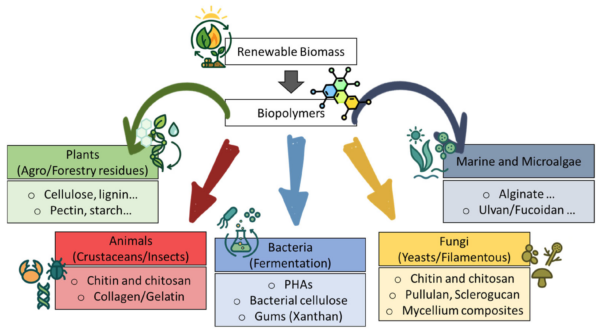
Representative feedstock sources of sustainable biopolymers, categorized by origin (plants, marine algae, animals, fungi, bacteria). Courtesy of Extraction, Characterization and Applications of Biopolymers from Sustainable Sources.
Each feedstock offers distinct advantages. Plant oils provide reactive molecular structures suitable for resin synthesis. Lignin contributes natural UV absorption and barrier properties. Cellulose delivers mechanical reinforcement and abrasion resistance. Starch offers film-forming capability and biodegradability. These characteristics allow bio-based materials to serve functions traditionally provided by petroleum-derived ingredients.
Despite these advantages, feedstock variability remains a significant challenge. Material composition can vary with crop type, climate conditions, and seasonal factors. Such variation can affect coating performance and complicate large-scale manufacturing.
Improving Performance Through Chemical Modification

Lignin-based additives can improve UV protection, barrier performance, and durability in renewable coating systems.
Among the various development approaches, chemical modification has emerged as the most effective strategy for improving bio-based coating performance. Rather than using biomass in its native form, researchers modify molecular structures to enhance functionality and overcome inherent limitations.
Plant oils provide a clear example. Through epoxidation, naturally occurring carbon-carbon double bonds are converted into epoxy-functional groups. This process increases reactivity and enables the production of bio-based epoxy resins suitable for protective coating systems. Researchers have demonstrated promising anticorrosion performance using formulations derived from epoxidized vegetable oils.
Starch has undergone similar development. While native starch exhibits poor water resistance and limited durability, chemical modification can improve hydrophobicity and thermal stability. These improvements expand its potential use in packaging and protective coatings.
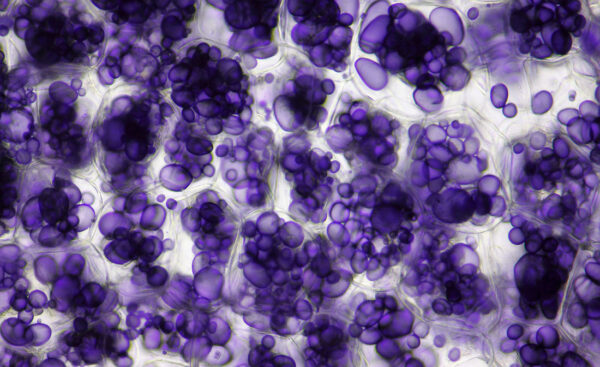
Modified starch can support bio-based coating formulations by improving film formation, biodegradability, and potential use in packaging applications.
Lignin also continues to attract attention. As one of the most abundant renewable polymers, lignin offers both UV-shielding and barrier properties. Modified lignin materials have improved coating hardness, solvent resistance, and weathering performance. In some systems, lignin-based additives have strengthened waterborne wood coatings while maintaining optical clarity.
Cellulose nanomaterials represent another promising route. Functionalized cellulose nanocrystals and nanofibers have demonstrated improvements in abrasion resistance, mechanical strength, and coating durability. These materials can reinforce coatings without significantly altering appearance or processing characteristics.
Moving Toward Commercial Adoption
Bio-based coatings are already finding applications in construction, packaging, furniture, automotive, and marine sectors. However, commercial success depends on more than renewable content alone. Manufacturers must balance performance, cost, feedstock availability, certification requirements, and production scalability.
One notable example highlighted in recent research involves a bio-based epoxy coating selected for a liquefied ammonia tanker scheduled for delivery in 2026. The project represents an important step for bio-based coatings in demanding industrial environments and demonstrates growing confidence in these materials.
While challenges remain, bio-based coatings have progressed well beyond early-stage experimentation. Advances in feedstock utilization and chemical modification continue to narrow the performance gap with conventional systems. For coating manufacturers, the most promising opportunities will likely come from technologies that combine renewable content with proven industrial performance and scalable production methods.
For a detailed review of bio-based coating feedstocks, conversion pathways, performance characteristics, and future research directions, readers can refer to the full study “Bio-Based Coatings: Progress, Challenges and Future Perspectives,” published in the Special Issue Recent Advances in Polymer Coatings.

Mariya Raja is a technical writer specializing in engineering and technology-focused content. Her experience covers plastics, sustainability, healthcare IT, and software, with a focus on industry trends, innovation, and regulatory developments.