
Microplastics Raise Concerns Over Antimicrobial Resistance
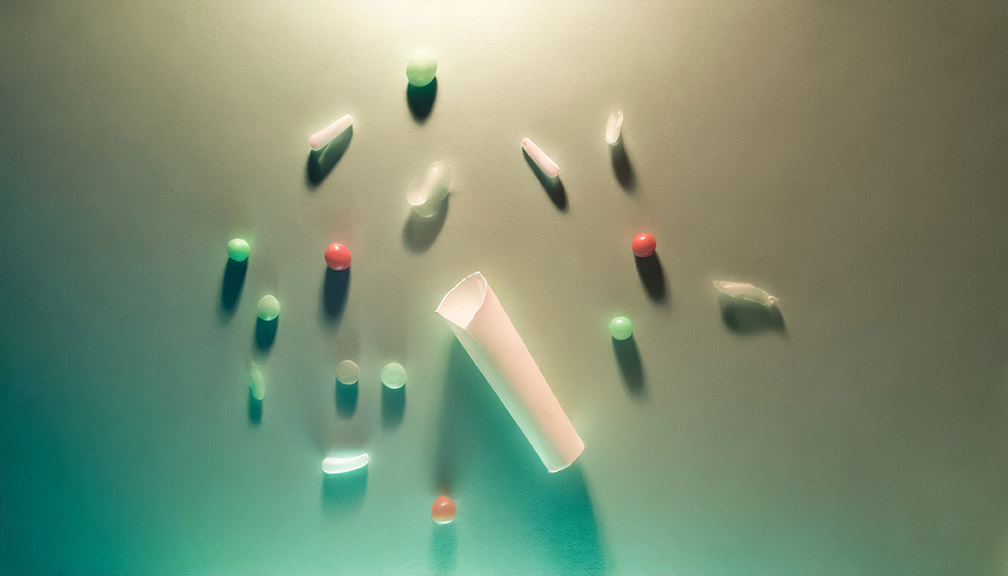
Microplastics can host microbial biofilms containing pathogens and antimicrobial resistance genes in aquatic environments.
Microplastics have become one of the most widely distributed forms of pollution on the planet. Researchers have detected them in oceans, rivers, lakes, soils, wastewater systems, and even the human body. Scientists estimate that as many as 125 trillion microplastic particles now exist on the surface of the world’s oceans.
For years, research focused largely on the physical impacts of these particles. Studies examined their persistence, movement through ecosystems, and effects on wildlife. More recently, however, researchers have begun investigating another characteristic of microplastics. Once they enter the environment, they are no longer inert particles. Instead, they become habitats for microbial communities.
You can also read: When Microplastics Meet PFAS: A Toxic Partnership in the Environment
From Plastic Particles to Biological Surfaces
These communities form biofilms on the particle surface. Collectively, they are known as the “plastisphere.” Researchers have found that the plastisphere can contain bacteria, pathogens, and antimicrobial resistance (AMR) genes. This has raised important questions about the role of microplastics in transporting microorganisms through aquatic environments.
A recent study published in Environment International explored this issue by tracking microbial colonization across a wastewater-to-marine pathway. The research examined how microorganisms colonize different materials under real environmental conditions and whether plastic substrates behave differently from natural or inert surfaces.
To conduct the study, researchers deployed materials at four locations representing decreasing levels of pollution. The sites included hospital wastewater, an upstream river location, a downstream river location, and a marine environment. This setup allowed the team to examine how microbial communities changed as materials moved away from heavily contaminated wastewater sources.
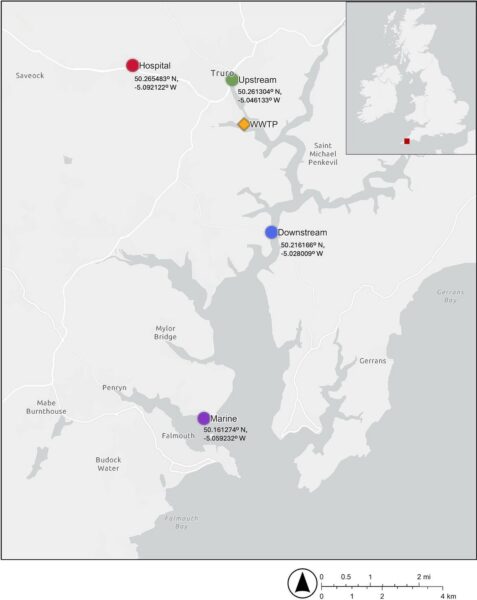
Map showing study area with all incubation sites marked, southwest England. Red: hospital; Green: upstream; Blue: downstream; Purple: marine. WWTP is also marked (Orange). Courtesy of Sewers to Seas: exploring pathogens and antimicrobial resistance on microplastics from hospital wastewater to marine environments.
Why Polymer Type May Matter
The researchers compared several substrate types. These included polystyrene particles, HDPE nurdles, polyethylene bio-beads, wood, and glass. Wood served as a natural reference material, while glass acted as an inert control. The materials remained submerged for two months before researchers analyzed the attached microbial communities using whole metagenome sequencing.
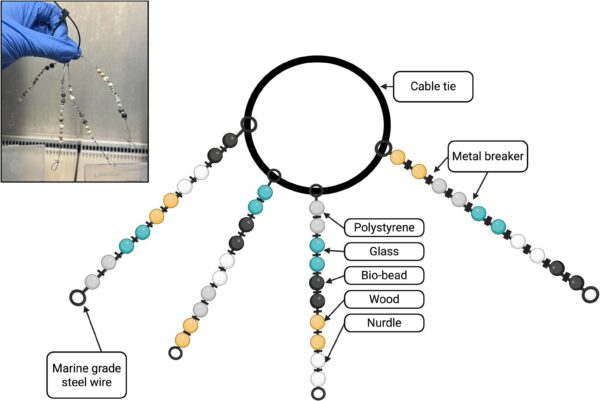
Schematic diagram of incubation structure alongside image of finalised structure (top left). Created in BioRender. Courtesy of Stevenson, E. (2025)
The results showed that microplastics rapidly became biological habitats. Across all locations, researchers identified more than 5,400 bacterial species. Community composition varied significantly from site to site. Hospital wastewater supported the highest microbial abundance, while downstream and marine environments contained different microbial profiles. Environmental conditions appeared to play the largest role in determining which microorganisms colonized the surfaces. However, the study also revealed important differences between substrate types.
Antimicrobial Resistance on Plastic Surfaces
One of the most notable findings involved antimicrobial resistance genes. Researchers detected resistance genes across all environments. Yet plastic substrates contained substantially more unique resistance gene sequences than the control materials. Plastic surfaces hosted 110 unique antimicrobial resistance gene sequences. In comparison, natural substrates contained 30, while inert substrates contained 17.
This finding suggests that microplastics may provide favorable conditions for the persistence of resistance-associated microbial communities. Unlike many natural materials, plastic particles can remain in the environment for extended periods. They can also travel considerable distances through rivers, wastewater systems, and marine environments. As a result, they may act as long-lived platforms for microbial attachment and transport.
Implications for the Plastics Industry
The study also found that not all plastics behaved in the same way. Certain resistance gene classes appeared more strongly associated with HDPE nurdles and polystyrene particles, particularly in downstream and marine environments. While the mechanisms behind these differences remain unclear, the results suggest that polymer type may influence microbial colonization patterns.
Several factors could contribute to these observations. Surface chemistry, hydrophobicity, roughness, and biofilm formation characteristics may all influence how microorganisms attach to different materials. Additional research will be needed to determine which properties are most important and whether they can be modified through material design.
For the plastics industry, these findings add a new dimension to the discussion surrounding microplastic pollution. Traditionally, concerns have focused on persistence, fragmentation, and environmental accumulation. The emerging evidence suggests that microplastics may also function as mobile microbial habitats capable of carrying pathogens and resistance genes through connected aquatic systems.
Understanding the Plastisphere
The study does not establish a direct health risk from specific plastic materials. However, it highlights the need to better understand the biological interactions that occur once plastic particles enter the environment. Future research may help identify material characteristics that reduce microbial attachment or limit the persistence of biofilms.
As concerns about microplastic pollution continue to grow, understanding the plastisphere will become increasingly important. Microplastics are not simply passive contaminants. They are active surfaces that interact with surrounding ecosystems in complex ways. For researchers and industry alike, those interactions represent an important area of investigation as efforts continue to reduce the environmental footprint of plastic materials.
Learn more about microplastics at the 2026 SPE Microplastics Forum.

Mariya Raja is a technical writer specializing in engineering and technology-focused content. Her experience covers plastics, sustainability, healthcare IT, and software, with a focus on industry trends, innovation, and regulatory developments.