
McLaren, Deloitte, and FIA Bring Circularity to Formula 1
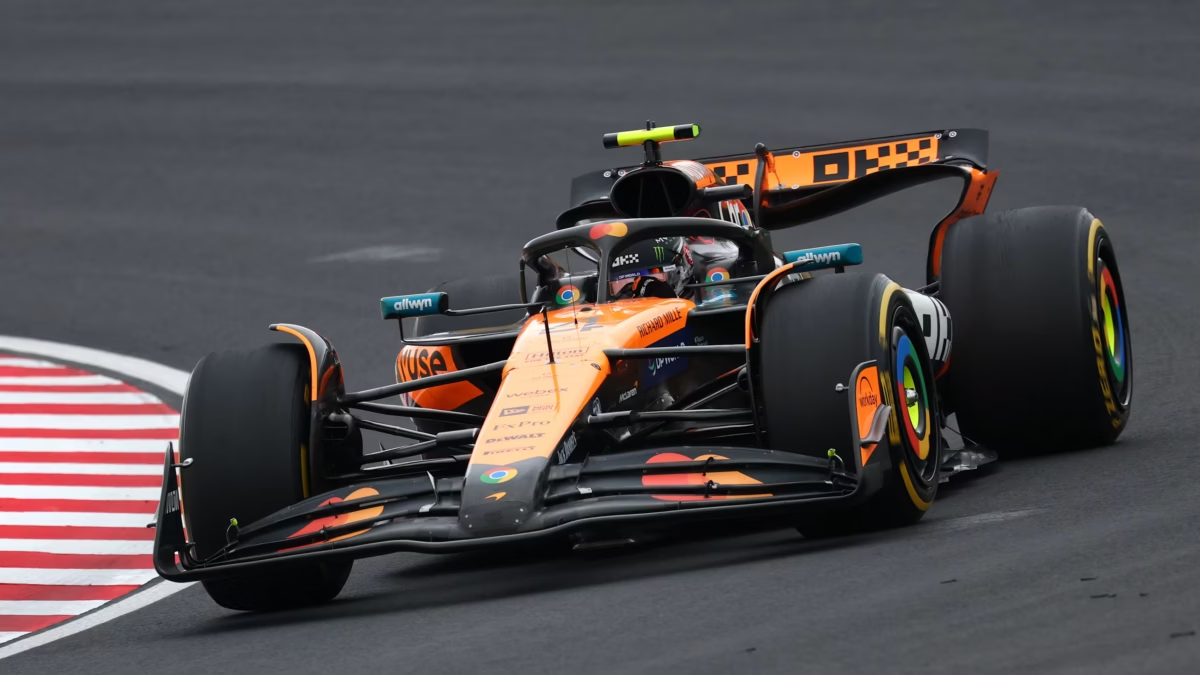
The F1 Constructors’ Circularity Handbook helps teams measure material use, waste, and circularity in Formula 1 car manufacturing.
For decades, Formula 1 has represented the pinnacle of engineering performance, pushing the boundaries of aerodynamics, lightweighting, and advanced materials. Today, however, this sport faces a new challenge: integrating sustainability into one of the world’s most technologically demanding environments without compromising competitiveness.
The collaboration between McLaren Racing, Deloitte UK, and FIA shows that sustainability and on-track performance are no longer mutually exclusive. The team has successfully maintained elite speed and safety while reducing its environmental footprint over the last year. A year ago, the organizations developed the F1 Constructors’ Circularity Handbook, a framework designed to measure and improve circularity in the development and manufacturing of Formula 1 cars. With which they assured, “By embracing circular economy practices, teams can minimize their environmental impact and drive innovation in Formula 1”.
You can also read: New EU Rules Redefine Automotive Plastics for Sustainability in 2025.
Measuring Circularity in High-Performance Manufacturing
The F1 Constructors’ Circularity Handbook introduces a standardized methodology that enables teams to evaluate their material use, waste management, and the integration of circular practices into chassis manufacturing. Rather than relying on isolated sustainability initiatives, the framework establishes a measurable system to track circularity throughout the entire lifecycle of Formula 1 components.
The handbook includes:
- A step-by-step methodology to identify and gather data, as well as estimate data to fill any gaps.
- Definitions of how to apply circularity criteria to differentiate input materials and waste streams
- Guidance on how to use this information to calculate a single circularity metric.
In Formula 1, where teams optimize every gram of material and every production process, circularity now becomes another engineering parameter alongside performance, durability, and cost efficiency. The Formula One World Championship stands upon the desire for innovation, which drives not only the technical advancements for motorsport, but also shows the potential to influence the mobility world. With this, automotive manufacturing companies increasingly recognize that measurable sustainability metrics drive meaningful progress.
Mclaren Racing and Deloitte Uk Pioneer Circularity in F1
McLaren Racing was the first organisation to achieve the FIA 3-star Environmental Accreditation and the first motorsport team to have its net-zero targets validated by the Science-Based Targets initiative.
This efforts date back since when McLaren pioneered the use of recycled carbon fibre on its F1 cars. Later, McLaren teamed up with its Official Transformation Partner, Deloitte, and identified further circularity opportunities within F1 constructor activities. The FIA supported the initiative and reviewed the findings, which highlighted the urgent need for a standardized, practical methodology to help teams measure sustainability in car manufacturing.
Deloitte’s deep industry expertise and knowledge of leading methodologies, including the Global Circularity Protocol, have guided McLaren toward the right strategies for making its car manufacturing more sustainable.
From Recycled Carbon Fiber to Circular Design
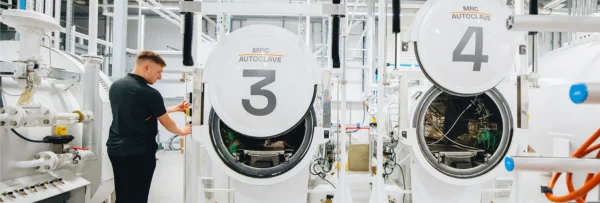
McLaren collaboration with V Carbon represents a significant step towards enabling circular practices in the production of Formula 1 cars. Courtesy of McLaren Racing.
In 2023 McLaren evaluated the use of innovative recycled carbon fibre (rCF) on the McLaren MCL60 during the United States Grand Prix. This was the teams first steps into the development of a fully circular F1 car by 2030 and the net zero target.
Together with innovative composites organisation, V Carbon, McLaren reduced by 90% of the emissions throughout the life cycle compared to a standard carbon fibre. As they explained in statistics “If just 1% of the carbon fibre manufactured globally in 2022 was rCF, it would save 32,535 tonnes of carbon emissions – equivalent to half of McLaren Racing’s total emissions in 2022.”
From Track Performance to Circular Materials
Considering that the manufacturing of an F1 car contributes to teams’ overall carbon footprint, this collaboration perfectly aligned with the company’s sustainability priorities. These included minimising the resources consumed and the waste produced, while keeping materials in circulation for as long as possible. The Chief Operating Officer, Mr. Piers Thynne mentioned “The potential future applications of rCF are hugely exciting. V Carbon offers up to 85% of carbon fibre original strength, making it strong enough for a variety of applications in F1, and beyond.” Similarly, the Director of Sustainability at McLaren Racing, Mr. Kim Wilson stated that developments like this exhibit potential for wider application across other industries.
For the plastics and composites industry, this development carries broader implications. Technologies validated in Formula 1 frequently influence automotive, aerospace, and mobility applications, particularly in lightweight composite structures and advanced manufacturing methods. And with these developments the companies state a clear message: the future of advanced materials will depend not only on how they perform on track, but also on how efficiently manufacturers source, use, recover, and reintegrate them into the production cycle.

Daniela Castaño is a mechanical engineer specializing in automotive and motorsport engineering, with experience in material testing, vehicle performance, advanced manufacturing, and emerging transportation systems.