
Introduction to PVC Gelation and Formulation: Fusion, Additives, and Processing
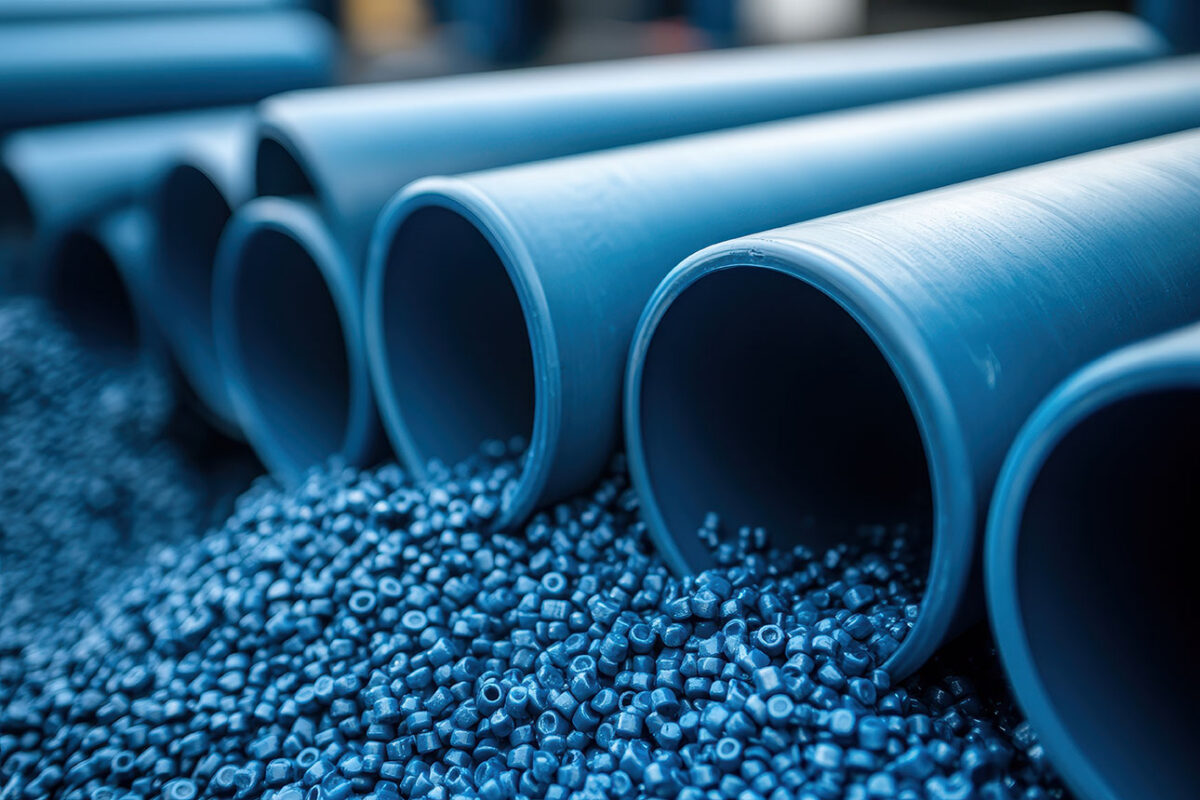
PVC gelation, fusion, additives, and processing conditions influence torque, thermal stability, surface finish, and mechanical performance.
Polyvinyl chloride (PVC) remains one of the world’s most versatile and widely used polymers, but producing high-performance PVC products requires far more than selecting the right resin. From pipe and window profiles to foam board and flooring, success depends on understanding the relationship between gelation, fusion, additives, and processing conditions.
You can also read: Advancing PVC Processing with Tung Oil-Based Heat Stabilizers.
In a recent technical presentation, PVC experts explored the science behind gelation and formulation, offering a detailed look at how processors can optimize mechanical properties, thermal stability, surface finish, and long-term performance. The discussion highlighted why PVC continues to be a cornerstone material across the building and construction industry and why understanding its processing behavior remains essential for plastics engineers.
What Is PVC Gelation?
One of the most important distinctions in PVC processing is the difference between gelation and fusion—two terms often used interchangeably but representing different phenomena. Gelation refers to the breakdown of PVC powder particles and the subsequent entanglement of polymer chains. Fusion, meanwhile, describes the processing stage where those particles become a homogeneous melt during extrusion or mixing. Together, they determine the final performance of the finished article.
Unlike many thermoplastics, suspension PVC begins as particles approximately 100–200 microns in diameter with a distinctive “popcorn-like” morphology. Beneath the particle’s outer skin lie primary particles roughly one micron in size. During processing, heat and shear break apart the outer structure, releasing these primary particles and allowing molecular entanglement to occur.
Achieving the proper level of gelation is critical. Under-gelation can lead to poor impact performance and inconsistent properties, while over-processing can result in degradation, discoloration, and excessive torque.
Why PVC Is Different from Other Thermoplastics
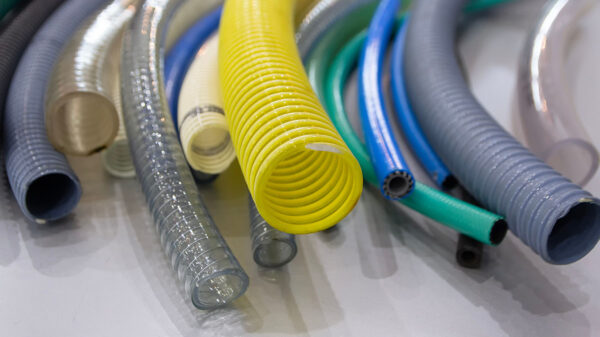
Flexible PVC pipes rely on plasticizers and carefully balanced additives to achieve the flexibility, durability, and processing performance required for demanding applications.
PVC’s unique chemistry contributes significantly to its widespread adoption. The polymer’s chlorine atoms provide strong secondary bonding and contribute to its excellent mechanical performance, weatherability, and durability in demanding applications.
Another distinguishing characteristic is PVC’s ability to be processed directly as a powder. Unlike many engineering resins that require pelletization, PVC can be blended with additives and fed directly into processing equipment. This simplicity has helped make PVC one of the most economical and versatile materials in the plastics industry.
Today, PVC is used extensively in:
- Pipe and fittings
- Window profiles
- Siding and fencing
- Foam board and trim
- Flooring
- Flexible products and films
- Medical and consumer applications
Understanding Torque Rheometry and Fusion Testing
For many processors, the Brabender torque rheometer remains the starting point for evaluating PVC compounds.
The instrument provides valuable insight into:
- Fusion time
- Torque development
- Thermal stability
- Bulk density effects
- Degradation onset
- Formulation changes
During a typical test, engineers observe PVC transitioning from a loose powder to a compacted mass, then to a fused melt. The resulting torque curve reveals whether a formulation is processing efficiently or approaching degradation. A sudden increase or decline in torque can indicate thermal instability, crosslinking, or excessive heat history.
Equally important is maintaining consistent test volume rather than weight, as changes in fillers, pigments, or additives can significantly alter bulk density and skew results.
The Building Blocks of PVC Formulation
Despite the complexity of modern PVC compounds, most formulations begin with a familiar foundation:
- PVC resin
- Stabilizers
- Lubricants
- Application-specific additives
According to the presenters, PVC itself can account for approximately 80% of a rigid formulation, making resin selection one of the most important decisions in product development. Molecular weight, K-value, and particle morphology all influence processability and end-use performance.
Stabilizers play a critical role by preventing dehydrochlorination and minimizing discoloration during processing. Lubricants, meanwhile, help balance metal release and internal fusion behavior.
The order of ingredient addition also matters. Stabilizers are typically introduced early to ensure protection as PVC particles begin swelling and becoming porous under heat. Lubricants and plasticizers follow, helping to promote consistent processing and compound homogeneity.
How Additives Influence Gelation
Few aspects of PVC processing are as interconnected as additive selection. Process aids, impact modifiers, lubricants, fillers, and pigments all affect gelation behavior, often in unexpected ways. Acrylic process aids, for example, are widely used to accelerate fusion by improving shear transfer between PVC particles and promoting molecular entanglement.
However, increasing process aid levels can also increase torque and, if pushed too far, contribute to degradation or excessive equipment wear.
Similarly, impact modifiers can improve toughness while simultaneously affecting:
- Fusion time
- Rheology
- Surface finish
- Gloss
- Mechanical performance
Even lubricants require careful balancing. Too much paraffin wax can inhibit gelation, while excessive calcium stearate may interfere with the development of a robust polymer network. The optimal formulation lies in achieving the right balance between fusion promotion and process stability.
Application Matters
PVC formulation is ultimately application-driven. Pipe formulations emphasize simplicity and durability, often relying on little more than resin, stabilizers, lubricants, and minor additive packages. Foam applications, on the other hand, demand aggressive fusion promotion and precise control of cell structure and density.
Flexible PVC introduces another variable: plasticizers. By swelling PVC particles and facilitating molecular interaction, plasticizers reduce the shear required for fusion and fundamentally alter processing behavior.
Foam processors must also consider factors such as skin thickness, density, and blowing agent performance, particularly in specialized processes such as Celuka foam extrusion.
Optimizing PVC Performance
Determining the “perfect” PVC formulation often requires a combination of analytical techniques and practical experimentation.
Differential Scanning Calorimetry (DSC) remains one of the most effective tools for evaluating post-processed PVC, helping engineers estimate processing temperature history and crystallinity. Typical rigid PVC crystallinity values fall in the 4%–10% range, though higher values have been reported.
Many processors also rely on design-of-experiment (DOE) studies to map process windows by varying:
- Processing temperature
- Impact modifier loading
- Additive levels
- Screw speed
- Torque conditions
These studies help identify the sweet spot where fusion, mechanical properties, and processability intersect.
Final Thoughts
PVC processing is a balancing act. Every change—whether to resin selection, stabilizer package, lubricant level, or impact modifier concentration—affects multiple aspects of performance.
Understanding gelation and formulation gives engineers the tools to troubleshoot more effectively, improve consistency, and develop products that meet increasingly demanding application requirements. As the presentation demonstrated, the path from PVC powder to finished part is far from simple, but mastering that journey remains one of the most valuable skills in polymer processing.

Plastics Engineering keeps plastics professionals worldwide up to date on the latest trends and innovations in materials, equipment and process technologies that impact all aspects of product development and applications in the plastics industry.