
Recovering High-Purity PC/ABS from End-of-Life Vehicles
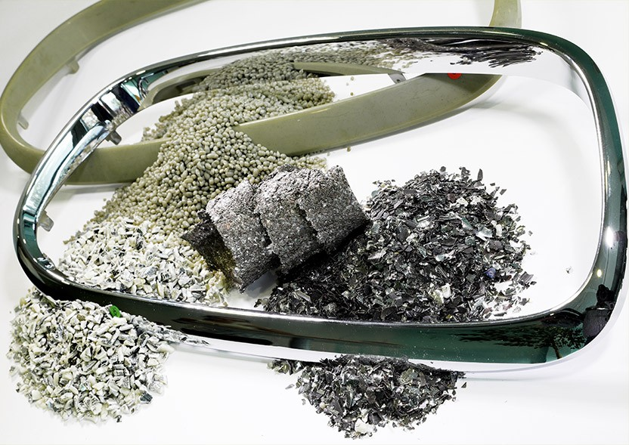
In a project with Audi AG, Fraunhofer IVV demonstrated how solvent-based recycling can recover high-quality PC/ABS from automotive waste.
European regulators are increasing circularity requirements for the automotive industry. A current draft states that around 25% of a vehicle’s plastic weight should come from post-consumer recycled material. It also states that one-quarter of that recycled content should come from end-of-life vehicles.
Therefore, manufacturers need to recycle components from current vehicles and develop new parts from PCR sources. However, automotive components often combine several materials. This complexity makes conventional sorting and mechanical recycling more difficult.
You can also read: Machines Can Be Smart
Fraunhofer IVV has developed a physical dissolution process to clean and recover thermoplastics from sorted plastic waste streams. In collaboration with CreaCycle GmbH, the institute released solvent formulations under the CreaSolv brand. These formulations separate specific plastics from heterogeneous input streams.
Tackling PCR in Automotive Applications
Fraunhofer IVV, Audi AG, and other industry partners are sorting, separating, and cleaning technical thermoplastics from shredder residue fractions. They use a solvent-based recycling process to obtain pure recyclates for new automotive components.
In the first stage, researchers cleaned plastic-rich fractions from shredded Audi vehicles. Then, they used spectroscopic sorting to remove non-plastic materials, including glass, metals, fibers, and wood. Early results showed that density sorting could separate valuable metals and produce recyclable plastic fractions. However, the process worked best when researchers combined density sorting with X-ray spectroscopy, laser spectroscopy, and tribo-electrostatic techniques.
The thermoplastic fraction contained PP, fiber-reinforced PP, PC, ABS, ASA, polyamides, and PC/ABS blends. Then, researchers used a solvent-based process to selectively separate the target plastics. After separation, they cleaned the polymer solution to remove soluble impurities. This step prevented contamination from oils, fillers, glass fibers, and other shredder residues. Finally, they separated the solvent from the purified polymer and reused it.
Tailoring Material Properties
The first pilot focused on recovering PC/ABS from post-consumer automotive shredder residue. Then, project partner Hoffmann + Voss treated the material with specific additives and compounded it with 50% pre-consumer regrind. This process produced a PC/ABS compound suitable for further evaluation.
This method offers one key advantage: it can produce highly pure recovered material. In addition, the process removed volatile organic compounds to meet strict automotive requirements for interior applications. The project also focused on preserving molecular weight and rheological properties. These parameters matter because they can directly affect the material’s mechanical performance. To continue developing the technology, the project is now processing shredder residues from automotive sources beyond Audi. Therefore, scaling up the solvent-based recycling process will be essential. This scale-up could also support the recovery of other material fractions, including polyamides and polyolefins.

Laura Florez is a mechanical engineer and holds a PhD in plastics processing. She has worked as an editor in the plastics industry for over 25 years and has experience in research, training, and consulting. Her main fields of expertise are injection molding and plastics recycling.