PFAS Rules Are Reshaping Fluoropolymer Selection
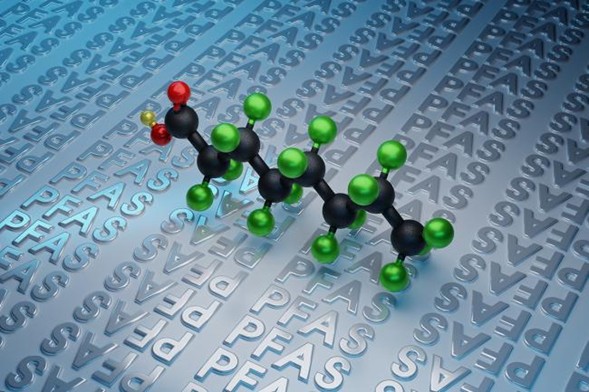
PFAS regulation is changing fluoropolymer selection by separating applications into essential, replaceable, and politically exposed uses.
PFAS regulation now pushes fluoropolymer selection toward a narrower technical test. The question is no longer only whether a material delivers the required part performance. The question is whether the application depends on a combination of properties that alternative materials still cannot match within the same operating window. That includes chemical resistance, thermal stability, dielectric performance, purity, permeation resistance, and long-term durability under aggressive service conditions.
This matters because fluoropolymers do not behave as a single class. PTFE, PFA, FEP, PVDF, and ETFE differ in melt processability, crystallinity, dielectric response, permeability, and heat and chemical resistance. These differences now shape a more practical sorting logic across fluoropolymer applications.
You can also read: Fluoropolymers Life Cycle and PFAS Contamination.
Essential Uses
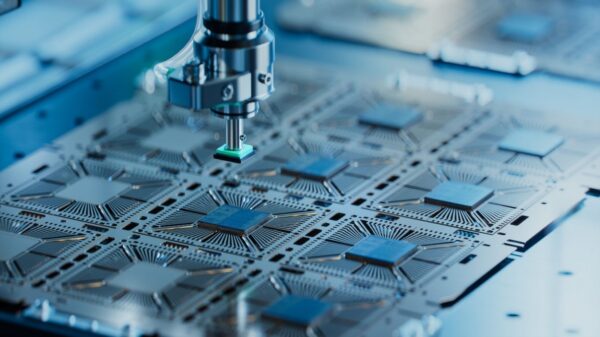
Fluoropolymers remain important in semiconductor applications that require high purity, chemical resistance, and process reliability. Courtesy of ECt.
The first bucket is essential uses. These applications depend on fluoropolymer property sets that remain difficult to replace without a measurable loss in reliability, cleanliness, thermal margin, or service life. The technical case is strongest where failure would compromise process integrity or device function.
Semiconductor fluid handling is a clear example. High-purity tubing, valves, seals, and vessel components often require very low extractables, resistance to strong acids and solvents, and stable performance under tightly controlled process conditions. Medical applications fall into the same category when the material must combine lubricity, chemical inertness, sterilization tolerance, flexural durability, and biocompatibility in a single component. Aerospace, energy, and severe-service industrial sealing systems also fall into this bucket when the design depends on fluoropolymer performance under combined heat, pressure, and chemical attack.
In these sectors, the technical argument must stay specific. General claims about high performance are no longer enough. The stronger case identifies the limiting property and shows why current substitutes cannot meet the same requirement without incurring a loss of function, a shorter life, tighter processing limits, or higher qualification risk.
Replaceable Uses
The second bucket is replaceable uses. These applications still benefit from fluoropolymer properties, but the required function does not depend on the full fluoropolymer property set. Substitution may still introduce tradeoffs, but the technical barrier is lower.
This bucket appears most often when performance depends on surface behavior rather than system-critical reliability. Easy release, stain resistance, oil and water repellency, and moderate friction reduction fit this range. Alternative materials may shift wear rate, coefficient of friction, adhesion, or processing window, but teams can often address those changes through reformulation, coating redesign, additive changes, or qualification work.
That makes this bucket technically different from essential uses. The issue is no longer whether a substitute exists. The issue is whether the performance gap stays small enough to accommodate through acceptable changes in processing, design, or service life.
Politically Exposed Uses

In cookware applications, the discussion around fluoropolymers often extends beyond material performance to broader regulatory and public concerns. Courtesy of Circulon.
The third bucket is politically exposed uses. These applications may still have a valid technical basis, but the discussion often shifts away from polymer-specific behavior and toward broad concern at the product-category level. In these cases, technical detail does not disappear, but it carries less weight when regulators, customers, or the public assess the application.
Nonstick cookware shows this clearly. PTFE provides low surface energy, good chemical resistance, and useful thermal stability under normal service conditions. Those properties support release performance and coating durability. But technical evaluation in this category also has to account for coating condition, abrasion, particle release from wear or damage, and thermal degradation at elevated temperature. Once the discussion centers on the product category itself, distinctions between high-molecular-weight fluoropolymers, residual species, processing history, and realistic exposure conditions can become blurred.
That makes this bucket technically difficult in a different way. The challenge is not only material performance. The challenge is that application-level scrutiny often compresses important distinctions that engineers would normally treat separately.
What This Means for Fluoropolymer Selection
The industry now needs a more rigorous framework for separating fluoropolymer applications. Essential uses depend on property combinations that still resist substitution. Replaceable uses face a lower technical barrier because the function depends less on the full fluoropolymer property profile. Politically exposed uses present a different problem because application-level attention can compress important technical distinctions.
That split gives plastics teams a more precise framework than broad debate around PFAS as a single category. The key issue is not whether all fluoropolymer applications stand or fall together. The key issue is which applications still depend on fluoropolymer performance in ways that teams can define, document, and defend against the actual engineering requirement.
SPE is hosting a two-day conference in Baltimore, MD in October on Chemical Safety and PFAS if you are interested in exploring the topic further.

María José Vargas is a mechanical engineer and MSc candidate in Materials Engineering and Nanotechnology at Politecnico di Milano. Her work focuses on environmental stress cracking in polyethylene, polymer failure behavior, plastics processing, and sustainable polymer applications.