
Optimizing TPU Durability for Medical Devices
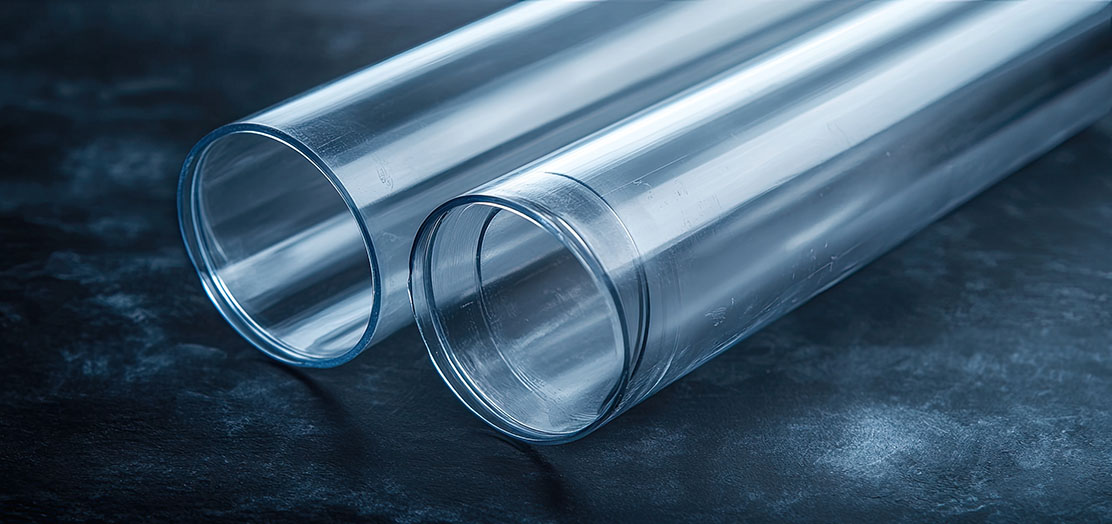
Engineers optimize TPUs with novel antimicrobial fillers and surface methods, improving commercial medical device manufacturing and preventing material failures.
Pathogens rapidly colonize untreated medical devices. This colonization causes severe healthcare complications and triggers product failures. To solve this engineering problem, developers alter the fundamental physics of thermoplastic polyurethanes (TPU). Development people reduce polymer surface roughness and disrupt bacterial attachment mechanisms by embedding inorganic fillers and applying precise mechanical surface modifications. These technical interventions transform standard elastomeric polyurethanes into commercially viable, highly infection-resistant medical materials.
You can also read: Polyurethane Composites with Industrial Waste Fillers.
Tuning Properties with Antimicrobial Fillers
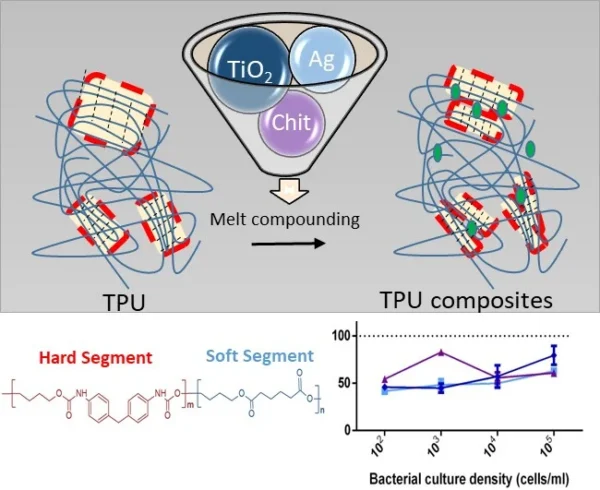
Engineers melt compound functional fillers directly into the polymer matrix to actively suppress bacterial colonization on commercial medical devices. Courtesy of Polyurethane-Based Composites: Effects of Antibacterial Fillers on the Physical-Mechanical Behavior of Thermoplastic Polyurethanes.
Manufacturers routinely compound thermoplastic polyurethanes with specific additives such as micronized silver, titanium dioxide, and chitosan to create antibacterial plastics. However, adding these fillers fundamentally shifts the thermodynamic interactions between the rigid hard segments and flexible soft segments of the polymer chain matrix. Engineers vigorously assess these modified composites to evaluate their uniaxial tensile limits before approving them for commercial production.
| Sample | Elastic Modulus (MPa) | Maximum Stress (MPa) | Elongation at Break (%) |
| Neat TPU | 26.2 ± 1.4 | 36.4 ± 1.6 | 1075 ± 44 |
| TPU-Ag | 30.5 ± 1.6 | 26.4 ± 3.1 | 975 ± 87 |
| TPU-Chitosan | 33.9 ± 1.5 | 25.9 ± 1.3 | 845 ± 21 |
| TPU-TiO2 | 19.8 ± 4.7 | 4.4 ± 1.1 | 123 ± 45 |
Uniaxial Tensile Performance comparison of antimicrobial vs Neat TPU Composites. Adapted from Polyurethane-Based Composites: Effects of Antibacterial Fillers on the Physical-Mechanical Behavior of Thermoplastic Polyurethanes
Data analysis reveals a clear tradeoff between mechanical rigidity and material ductility. Silver and chitosan particulates noticeably increase the stiffness of the baseline material while diminishing overall flexibility. Conversely, titanium dioxide introduces a severe degradation of the essential crystalline structure. This specific degradation drastically lowers both tensile strength and elongation capacity. Developers must carefully weigh these structural compromises. For rigid structural housing, silver additives provide excellent utility. High-flexibility applications, such as cardiovascular tubing, require alternative formulations to prevent mechanical failure.
Managing Polymer Rheology in Processing
Understanding the dynamic viscoelastic flow of these advanced composites ensures proper extrusion and injection molding at industrial scales. Rheological testing confirms that specific filler materials directly influence the microphase separation of the polymer melt. Technicians observe that pure polyurethanes, silver-loaded composites, and chitosan-blended materials maintain highly consistent complex viscosity profiles at elevated processing temperatures. In stark contrast, titanium dioxide severely disrupts internal hydrogen bonding and prevents effective polymer chain crystallization. Process engineers utilize this exact data to optimize extruder barrel temperatures and control mold injection pressures, eliminating structural defects in the final product.
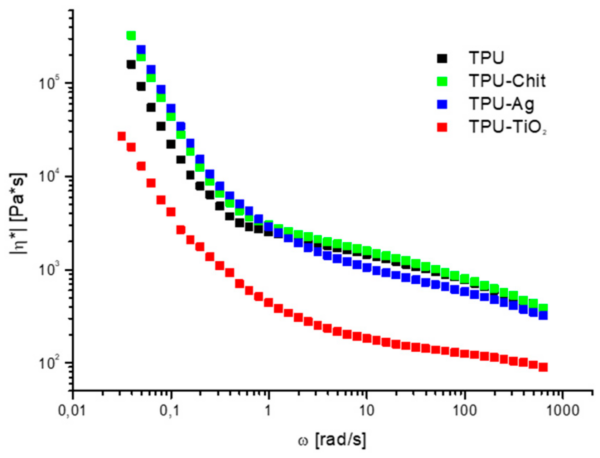
Complex viscosity as function of the frequency range ω = 628.3–0.04 rad/s at 190 °C for TPU and TPU-based composites. Courtesy of Polyurethane-Based Composites: Effects of Antibacterial Fillers on the Physical-Mechanical Behavior of Thermoplastic Polyurethanes.
Controlling Topography to Reject Pathogens
Ahead of deploying internal chemical fillers, physical surface modification drastically reduces bacterial adhesion. Developers implement specialized bar coating techniques to physically flatten the macroscopic structure of the extruded polymer film. Atomic force microscopy clearly confirms that industrial bar coaters achieve the lowest surface roughness values compared to traditional film casting methods. Smooth topographies physically eliminate the microscopic crevices that bacteria exploit. Pathogens like Escherichia coli and Staphylococcus aureus fail to secure an anchor point on these flattened domains. Manufacturers readily implement these continuous bar coating systems into high-speed roll-to-roll production lines, yielding sanitary catheter tubes and sterile surgical wraps at high commercial volumes.
| TPU Surface | Adhesion | ||||||
| Planktonic Behavior Predicted by Haralick Analysis | Biofilm | PLTs | hFg | NIH-3T3 | |||
| E. coli | S. aureus | E. coli | S. aureus | ||||
| Film | ~1% | ~50% | 80% | 50% | <0.5% | ~15% | <2.5% |
| Brush | ~1% | ~70% | 70% | 70% | <0.5% | ~15% | <2.5% |
| Bar Coater | ~1% | ~25% | 60% | 20% | <0.5% | ~20% | <2.5% |
Summary of the adhesion onto TPU surfaces. Courtesy of Surface Properties of a Biocompatible Thermoplastic Polyurethane and Its Anti-Adhesive Effect against E. coli and S. aureus
Integrating antimicrobial fillers and advanced surface coating techniques deliver robust, scalable manufacturing solutions for the competitive medical plastics industry. Materials engineers successfully dictate the performance of thermoplastic polyurethanes by expertly balancing molecular rigidity against external surface topography. These vital innovations accelerate the commercial manufacturing pipeline. These techniques empower global product developers to build infinitely safer, high-performance medical devices for an incredibly demanding modern healthcare market.

Andres Delgado is a mechanical engineer specializing in design and quality assurance, with experience in precision seal design, turbomachinery maintenance, and orthopedic medical devices. He currently works as a Design Quality Engineer focused on New Product Introductions for knee implants and compliance with advanced manufacturing standards.