How Regionalization Is Reshaping Polymer Trade Flows
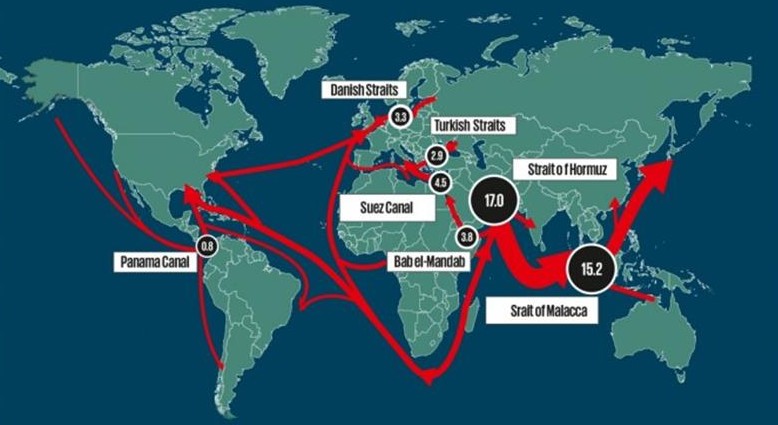
Rising costs and trade friction are splitting polymer networks: global scale remains vital for virgin resins, while circularity drives regionalism.
Polymer supply networks still run on global trade. They have not split into self-contained regional systems. According to Houssini, Li, and Tan in Communications Earth & Environment, the plastic trade reached a vast scale in 2022. UNCTAD data cited in the research brief shows similar intensity in 2023. Those flows still connect feedstock-rich exporters, large conversion hubs, and end-use markets.
You can also read: Interest Grows in Chemical Recycling.
That structure reflects industrial geography, not corporate habit. The Nature analysis shows feedstocks remain concentrated in resource-rich regions, while processing clusters are in major manufacturing economies. That pattern makes full regional self-sufficiency difficult outside large blocs. Tan and co-authors also show in Circular Economy that trade shocks usually reroute flows rather than shrink them outright.
Resilience Redefines Supply Chains
Companies now want flexibility inside those global networks. They do not want pure efficiency at any cost. OECD analysis argues that firms increasingly add redundancy, diversify their supplier base, and screen for geopolitical exposure rather than pursue simple reshoring. The WTO’s Global Value Chain Development Report 2025 reaches a similar conclusion. It describes “reglobalization,” not deglobalization, with shorter, more diversified chains within wider global systems.
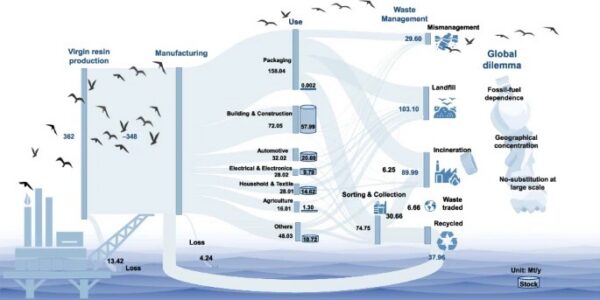
Global plastics value chain flows from production to end-of-life, highlighting dominant packaging demand, material losses, and the limited share of recycling relative to landfill and incineration. Courtesy of Complexities of the global plastics supply chain revealed in a trade-linked material flow analysis.
That shift is relevant for polymer executives because concentration risk now carries a direct cost. Freight disruptions, sanctions, anti-dumping cases, and customs friction can quickly alter sourcing economics. OECD analysis on global trade risks shows how the Red Sea crisis, Panama constraints, and geopolitical tensions disrupted supply chains without collapsing trade itself. In polymers, resilience now depends less on distance alone and more on optionality.
Europe Exposes the Limits of Regionalization
Europe offers the clearest test case. If regionalization alone created resilience, producers would now expand broadly across the region. Instead, producers are cutting upstream assets. Dow said in 2025 that it would shut three upstream European assets because of structural cost and demand pressures. INEOS made a similar argument when it announced closures in Rheinberg.
At the same time, trade policy has grown more active. The European Commission opened an anti-dumping proceeding on PET imports from Vietnam in May 2025. China also imposed anti-dumping duties on POM copolymers in 2025, affecting imports from major suppliers. Those moves show that trade remedies now shape polymer sourcing in commodity and engineering grades alike.
Two Networks Now Emerge
The industry therefore faces not a binary choice but a split model. Virgin polymer chains will remain global because feedstocks, scale, and integration still favour that model. Yet circular systems often reward shorter loops. De Pilla Jr. and colleagues show in Cleaner Logistics and Supply Chain that circular plastic product development often benefits from shorter supply chains and tighter regional coordination.
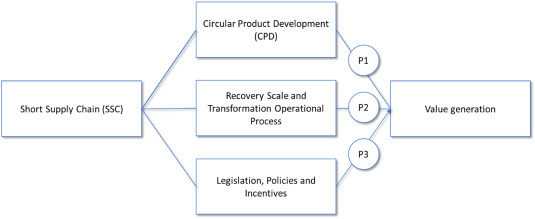
Integrated circular systems combine product design, recovery scale, and policy incentives within short supply chains to enable efficient value generation. Courtesy of A framework for product development based on recycled plastic from pesticide packaging: A study of short supply chains from the perspective of circular economy.
That divergence will shape the next phase of network design. Global molecules will keep moving. But regional resilience, traceability, and recycling infrastructure will increasingly decide who captures value.

Mariana Holguin is a mechanical engineer with a master’s degree in finance. She specializes in the financial and strategic analysis of engineering projects, with experience evaluating capital investments, supply chain economics, and FP&A across industrial sectors.