
Choosing the Right Recycling Technology for Each Application
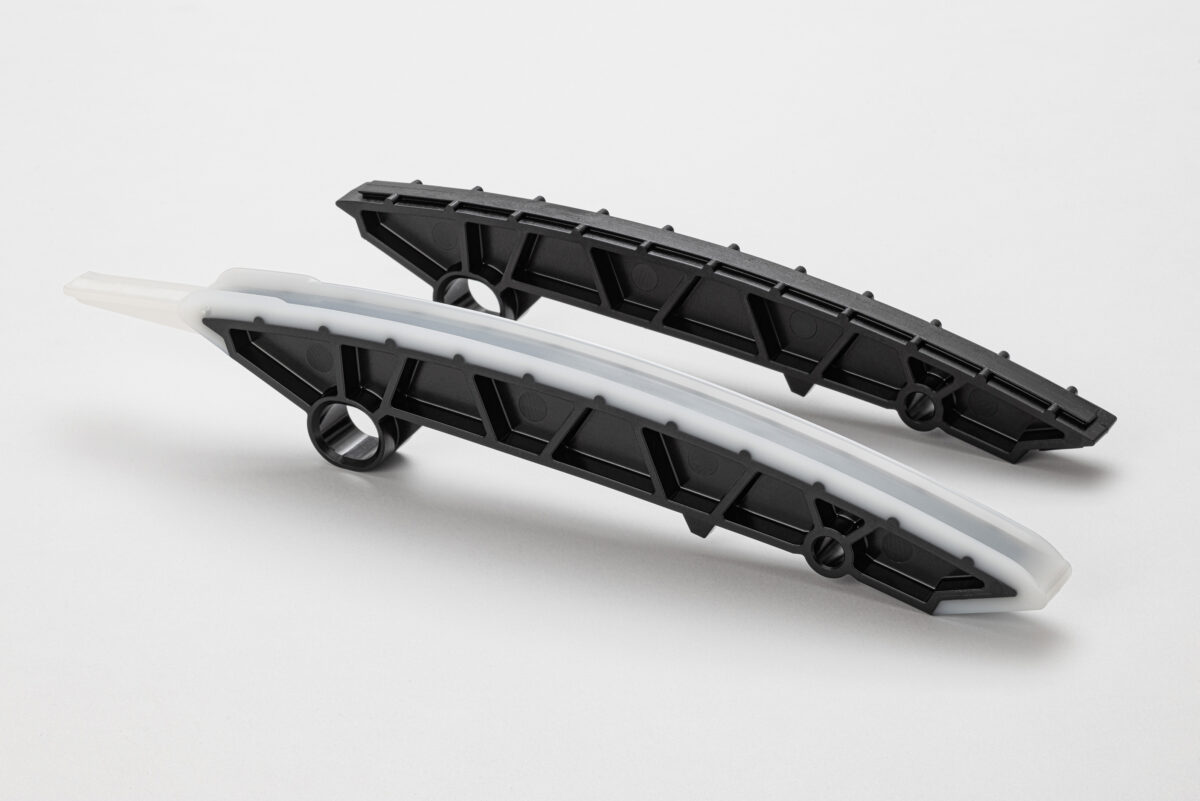
Recycling technologies vary widely depending on feedstock quality and target performance. Selecting the right pathway determines whether circularity delivers real value or compromises material performance.
Not All Recycling Is the Same
Recycling often appears as a single concept, but in practice, it encompasses multiple technologies with distinct capabilities and limitations. Mechanical recycling remains the most familiar approach, where processors grind plastic parts into flakes and remelt them into new products. However, recycling can also involve solvent-based separation, depolymerization into monomers, or even conversion back into feedstock through chemical processes. Each pathway serves a different purpose and depends on the material’s condition. Selecting the appropriate technology requires evaluating several factors, including waste-stream purity, material degradation, molecular-weight retention, and the intended application of the recycled resin.
You can also read: Interest Grows in Chemical Recycling.
Mechanical Recycling: The First Option
Mechanical recycling should be the preferred option when the waste stream is sufficiently pure or can be effectively sorted. It remains the most energy-efficient pathway and typically delivers the lowest carbon footprint. However, sorting introduces limitations. While it produces a high-purity fraction, it also generates residual mixed waste that cannot be processed by conventional mechanical methods. When polymer chains retain sufficient molecular weight and structural integrity, mechanical recycling enables reprocessing without significant loss of performance. In these cases, it offers the most efficient route to circularity. Recent developments show that even traditionally difficult materials can enter this pathway. BASF demonstrated that modified cross-linked polyurethane foams can be liquefied and reintroduced into polyol systems, enabling closed-loop reuse.
Solvent-Based Recycling for Complex Streams
When waste streams contain mixed or difficult-to-sort materials, solvent-based recycling offers an alternative. This approach selectively dissolves target polymers while preserving their molecular structure. For example, separating polyamide 6 from polyamide 6,6 requires this level of precision to recover materials suitable for high-performance applications. By maintaining polymer chain integrity, this method enables reuse in demanding environments such as automotive components.
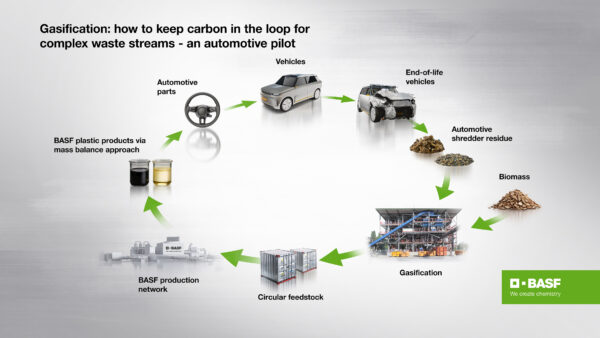
Porsche AG and BASF SE, in collaboration with technology partner BEST – Bioenergy and Sustainable Technologies GmbH, have successfully completed a pilot project on recycling mixed waste from end-of-life vehicles.Courtesy of BASF SE.
Depolymerization: Returning to Monomers
When materials degrade through thermal, chemical, or mechanical stress, recycling must move one step further. Depolymerization breaks polymers down into their original monomers, which can then be purified and repolymerized. This approach restores material quality to near-virgin levels. BASF demonstrated this pathway with rigid polyurethane foam from refrigeration insulation, converting waste back into reusable raw materials for similar applications. Depolymerization also applies to textiles and automotive plastics exposed to harsh service conditions. For example, BASF developed loopamid by recovering polyamide from textile waste through this process.
Gasification: The Last Option for Mixed Waste
At the end of the recycling cascade, highly mixed and contaminated waste streams remain. These materials cannot be sorted or processed through conventional recycling methods.
Instead of incineration, gasification offers a pathway to recover value. This process converts waste into synthesis gas, which can then be transformed into hydrocarbon feedstock suitable for petrochemical production. By combining waste streams with biomass, gasification enables the production of feedstock that can replace fossil-based naphtha. This approach preserves carbon within the materials cycle rather than releasing it as CO₂.
Matching Technology to the Task
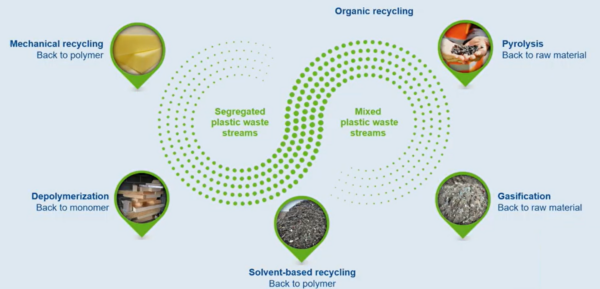
There are technologies to “connect the dots” along the journey to close the loop in plastics recycling. The choice of technology should be defined by the quality of the waste stream you can get. Image Source: BASF – Plastics Europe Conference, K 2025.
No single recycling technology fits all applications. The optimal solution depends on the quality of the waste stream and the performance requirements of the final product. As Dr. Bernhard von Vacano, BASF, emphasizes, the decision must consider cost, energy consumption, and carbon emissions. Ultimately, successful circularity depends on aligning the recycling pathway with the material’s condition and the application’s demands. The industry now faces a critical challenge: not simply increasing recycling rates, but selecting the right technology to preserve value across the entire lifecycle of plastics.

Laura Florez is a mechanical engineer and holds a PhD in plastics processing. She has worked as an editor in the plastics industry for over 25 years and has experience in research, training, and consulting. Her main fields of expertise are injection molding and plastics recycling.