Rheological Additives for Low-Roughness Aerospace Coatings
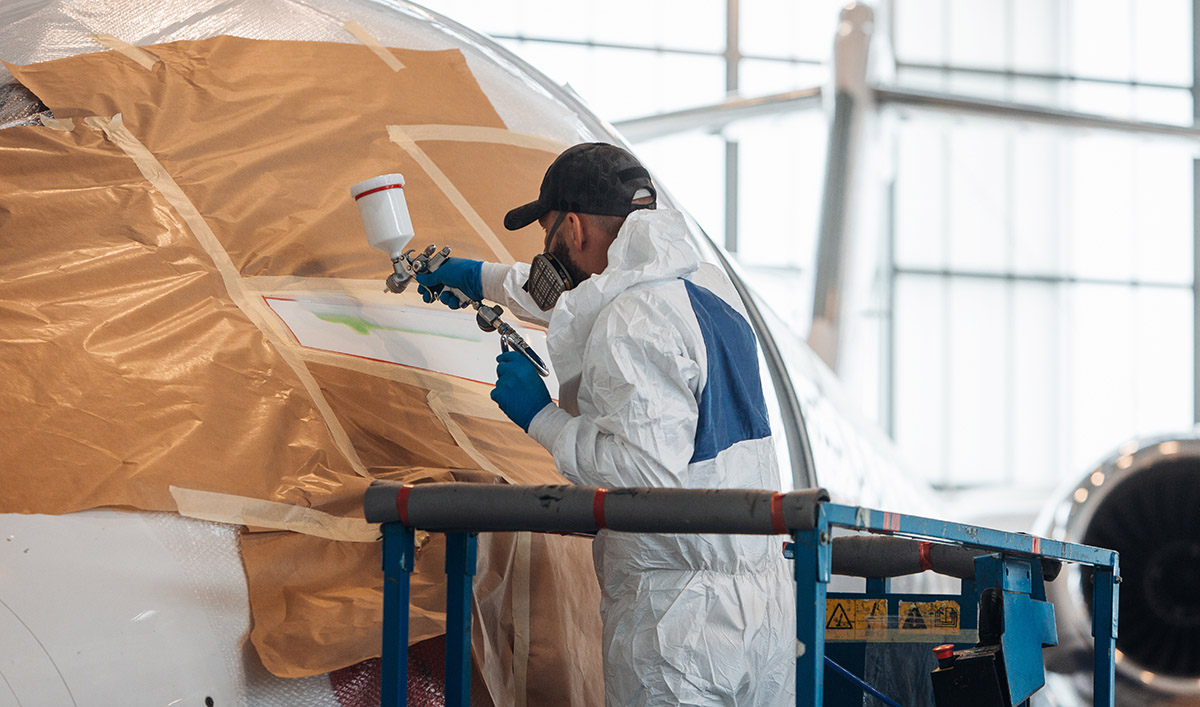
The need to reduce aerodynamic drag in modern aircraft leads to a focus on the surface roughness of external coatings.
Experimental aerodynamic studies show that roughness variations on the order of micrometers can cause earlier transition of the boundary layer. Specifically, that transition from laminar to turbulent results in measurable increases in drag and fuel consumption. Therefore, designing coatings with a rheological profile suitable for spray applications with minimal surface texture is a critical issue in aerospace.
You can also read: Self-Healing Coatings for Automotive Applications.
Surface Roughness and Boundary Layer
The connection between rheology and aerodynamics manifests in the final film’s roughness and its effect on the boundary layer. Studies by AIAA and NASA have analyzed how roughness features distributed across the surfaces of airfoils induce boundary-layer transition. For example, controlled variations in the roughness height on NACA airfoils modify the boundary-layer thickness and turbulence intensity. As a result, these variations affect the transition point and the skin drag of the whole lifting surface.
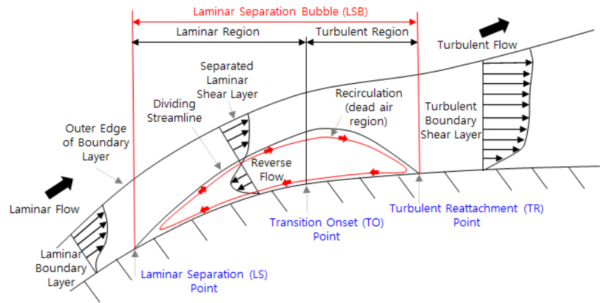
Laminar boundary layer is desirable to maximize aerodynamics performance. The onset of the transition is multivariable dependent, being surface roughness one of the most important variables. Courtesy of Characteristics and Effects of Laminar Separation Bubbles on NREL S809 Airfoil Using the Gamma-Reynolds Transition Model. Open Access CC BY 4.0.
In transport aircraft, the surface friction accounts for approximately 50% of the total drag budget. Therefore, it is critical to quantify the impact of surface roughness on overall aerodynamic performance in the transonic regime. Experiments in laminar flow wing profiles show that roughness variations cause the transitional Reynolds to decrease from 6.4e6 to 2.4e6. Specifically, changes from a polished surface of 0.3 µm-RMS finish to a non-polished surface of 1.0 µm-RMS finish. This premature transition to turbulent flow reduces the laminar portion of the wing, resulting in a 10% fuel consumption penalty.
Table: Surface Condition vs Aerodynamic Performance.
Adapted from Impact of Degraded Aviation Paints on the Aerodynamic Performance of Aircraft Skin.
| Surface Type | Roughness (µm Ra) | Lift Coefficient | Drag Coefficient (α=5°) | Critical AoA (°) |
|---|---|---|---|---|
| H (smooth) | ~0.35 | 0.98 | 0.048 | 14.2 |
| F (minor damage) | ~1.00 | 0.94 | 0.062 | 13.1 |
| G (moderate damage) | ~3.03 | 0.92 | 0.068 | 11.6 |
| I (severe damage) | > 5.70 | 0.85 | 0.079 | 10.4 |
Modern computer vision and deep-learning tools have estimated the roughness of aircraft surfaces achieving less than 0.3 μm Ra. These findings make it possible to establish strict target roughness specifications. In particular, high-solids systems achieve a mean arithmetic roughness (Ra) of 0.35 µm compared to 3.03 µm that conventional water-based systems achieve. The formulator must meet these thresholds by precisely controlling thixotropy and shear viscosity to fill microdefects during early leveling and optimize the film’s surface tension.
Rheological Profile and Types of Additives
Aerospace industry coatings are high-solids and water-based with low-VOC to comply with environmental regulations. As a result, they require precise viscosity control across the entire shear range. This includes storage, pumping, atomization, and leveling on the substrate. Optimal rheology combines two important aspects. First, low viscosity at high shear for fine and uniform atomization. Second, high viscosity at low shear to prevent sagging, sedimentation, and orange peel.
Modern rheological additives are cellulose-based thickeners and associative polymers, such as ASE, HASE and HEUR. Also, there are inorganic systems such as organophilic clays and fumed silicas. In high-performance water-based systems, HEUR and HASE thickeners predominate due to their ability to form reversible networks through hydrophobic associations. Similarly, inorganic thixotropies and fibrillar polyurethanes generate three-dimensional structures that break down easily under shear and reassemble at rest. This combination allows formulators to precisely adjust viscosity in low and high shear zones, controlling thixotropy and generating pseudoplastic profiles. These additives reduce thickness per-pass, improve sag resistance, and help to fill microdefects during early leveling. This results in more uniform films with lower average roughness, a critical factor for optimizing aerodynamics and performance of aircraft.
How is Surface Roughness Optimized?
The way coating flows and levels after atomization depends on two important aspects. The high-shear viscosity during droplet impact, and the recovery of the rheological structure at lower shear rates within seconds. Case studies on sprayed water-based industrial coatings show that high-efficiency HEUR modifiers produce noticeably shear-thinning profiles. The behavior exhibits low viscosity in the application zone and rapidly increases in viscosity as the shear rate decreases. In this manner, this behavior promotes leveling and the suppression of “orange peel.”
The combination of associative thickeners with flow and leveling additives, such as modified polysiloxanes, can improve deaeration and reduce craters. All of which contribute to improving film distribution and getting smoother final surface. However, there is a delicate balance between excessive thixotropy or too high shear-rate viscosity, versus too low shear-rate viscosity. Too high can freeze the microtopography generated by the spray process, while too low can promote sagging and local buildup.
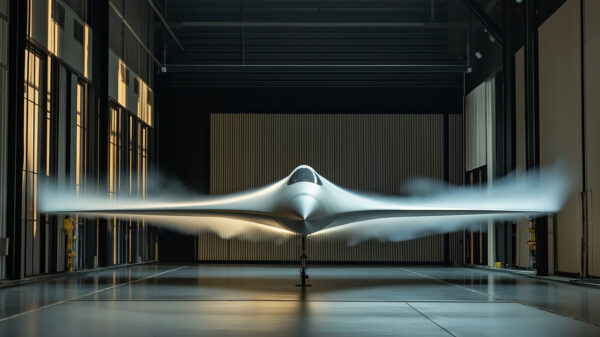
In aerospace applications, formulators must consider additional constraints. Namely, resistance to aviation fluids, UV stability, compatibility with de-icing systems, and elastomechanical behavior under large wing deformations.
Optimization involves adjusting the type and dosage of rheological additives based on the resin system, solids content, and application equipment. Additionally, the film requires sufficient time to self-level before solidification takes over. This solidification is due to evaporation and/or curing, and it is the main parameter to create the process window. Yet, creating it is the main technical challenge, as it requires balancing, in a matter of seconds, three opposing mechanisms:
- Low viscosity at high shear to ensure fine atomization and prevent defects.
- Controlled recovery of viscosity after deposition for the smoothing of micro-irregularities.
- Increase in viscosity at low shear that provides resistance to sagging on vertical surfaces.
This balance becomes particularly critical in high-solids systems, where the limited flow path significantly narrows the operating window. Thus, requiring high molecular weight polymer networks (>1,000,000 g/mol) that stabilize the film without compromising its self-leveling ability. Finally, formulators must ensure that these reversible networks retain the elasticity and adhesion necessary to withstand structural deformations during service.
Current and Future Challenges
Environmental demands have directly impacted aerospace coatings through three important aspects. The transition to water-based and high-solids systems, regulatory pressure regarding VOCs and biocides, and the demand for renewable raw materials. In response, manufacturers are developing series of bio-based and high-efficiency HEUR and HASE modifiers. These can provide the same or better rheological control with lower dosages and reduced environmental impact. This opens the door to more sustainable aircraft exterior coatings.
Another growing area of research involves the design of additives that control shear viscosity and extensional viscosity. The latter is a key parameter in atomization and in the breakup of jets and films during spray application. Researchers are currently exploring polymeric modifiers with anisotropic architecture or those based on special particles such as Janus-type. The goal is to refine the droplet size distribution and reduce the tendency toward “spitting” or large droplets formation. In parallel, the use of advanced experimental techniques combined with CFD models closes the loop between formulation, application, and performance.
Collectively, rheological additives are evolving from simple thickeners to flow engineering tools. Thus, they enable the design of coatings with robust application, ultra-low roughness, and compliance with environmental and operational requirements. All these pieces will drive the development of modern and high-efficiency aircraft.

Carlos Ruidiaz is a mechanical and aeronautical engineer with experience in fluid systems design for Aero-Propulsion, Oil & Gas, and Power Generation.