
Packaging Redesign: Why Most Fail and What Drives Success
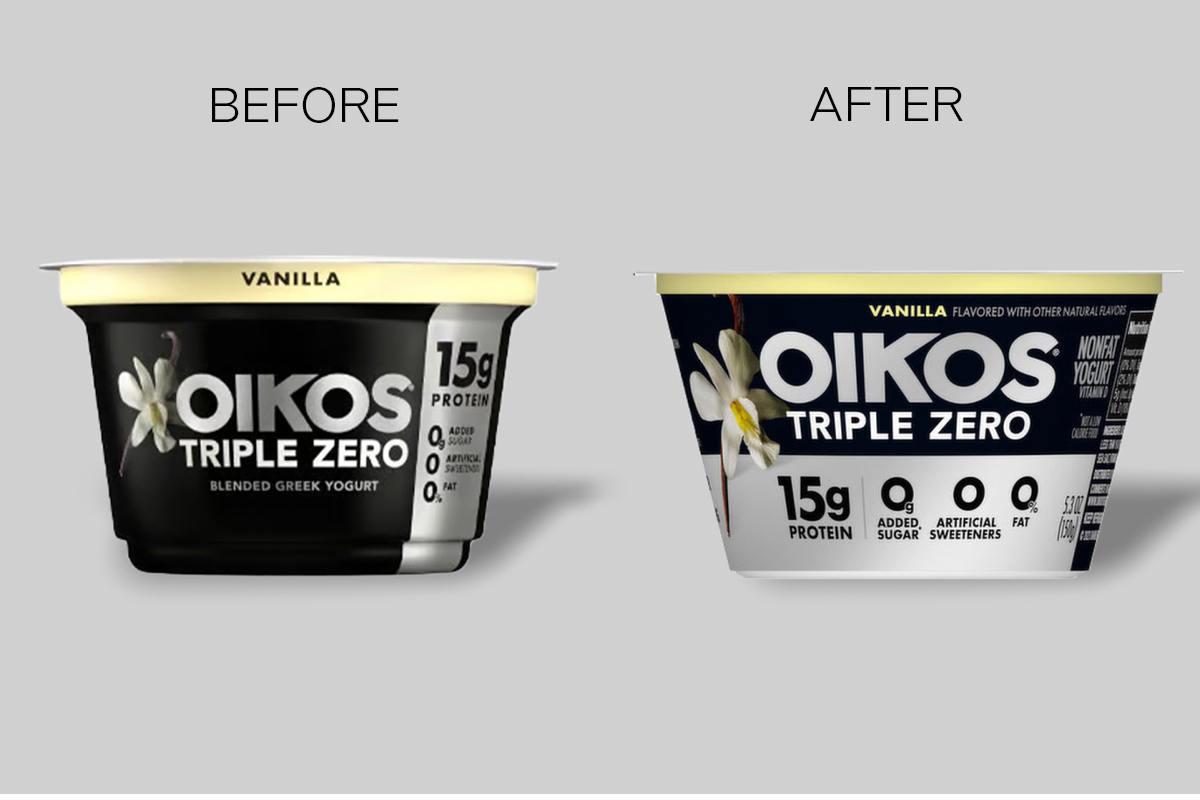
In a marketplace where visual familiarity drives purchasing behavior, the decision to revolutionize packaging design is among the most consequential a brand can make.
The tension between maintaining recognizable consistency and signaling meaningful change through radical redesign creates a paradox that defines modern packaging strategy. Research from William Caruso’s doctoral study at the Ehrenberg-Bass Institute for Marketing Science, analyzing 1,336 redesigns from 744 brands across 25 categories, reveals a sobering reality: nine out of ten redesigns fail to deliver meaningful sales lift.
You can also read: When Packaging Shape Speaks Louder Than Words.
The Mathematics of Similarity
Caruso’s investigation established that the newly redesigned packaging measures only 47% similar to previous designs. This finding illuminates the industry’s propensity for change, yet failure rates suggest change alone guarantees nothing. Research across thousands of tested designs reveals further nuance: 25% of revolutionary approaches result in lower purchase rates than predecessors, while evolutionary changes achieve half that rate. Revolutionary designs introduce shoppability benefits at a 25% rate, compared to 16% for evolutionary approaches.
Packaging redesigns are more likely to succeed when they serve as an evolution, bridging the gap between what exists in consumers’ minds and what appears on the shelf. Higher familiarity links directly to positive outcomes.
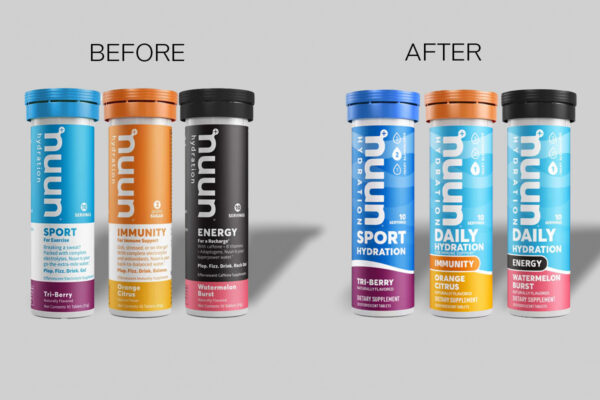
Nuun hydration enhancer redesign demonstrates function-first communication architecture through dominant blue colorway signaling core benefit, strategic accent colors enabling subline navigation, and modular badge system replacing verbose copy with scannable claims. Design by Nestlé Health Science internal team. Courtesy of Designalytics.
The Architecture of Recognition
Consistency in packaging creates what behavioral researchers call visual signposts. The repetitive placement of dominant, recognizable elements establishes cues that guide shoppers to brands during browsing or active search. These signposts function as navigational tools in retail environments where decisions occur in milliseconds.
Caruso’s research revealed that packaging formats, global implementation, and time in market significantly relate to higher levels of similarity. The study identified critical success factors: advertising support through in-store displays and digital media correlates with positive outcomes, while the presence of a dedicated redesign budget paradoxically links to negative sales uplift. This counterintuitive finding suggests that throwing resources at redesign problems without strategic direction produces inferior results to focused, evidence-based approaches.
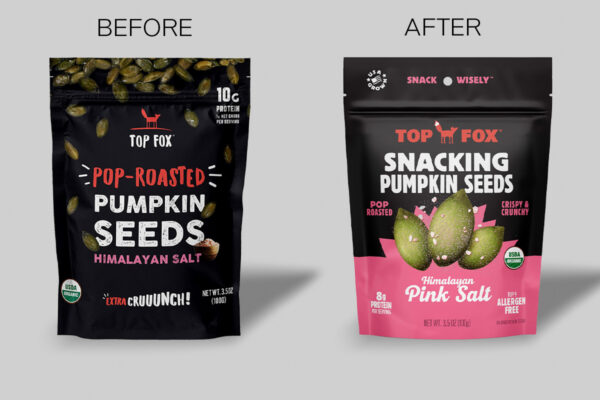
Top Fox snacking seeds packaging executes category repositioning through unambiguous behavior cues. The flavor-forward design drove 54% sales growth by explicitly granting permission to consume seeds as indulgent snack rather than salad topper. Design by Interact Brands. Courtesy of Designalytics.
The Path to Success
Distinctive asset testing emerges as a critical factor linked to positive sales uplift. When brands understand which visual elements carry recognition power, they make informed decisions about what to preserve and what to evolve. Testing distinctive assets, changing more elements when warranted, and having clear objectives correlate with higher success rates. Conversely, relying on focus groups or brand attitudinal measures without testing actual distinctive elements correlates with lower success.
Structural modifications present unique complexities. Changes to shape and material in package construction impact type layout, color placement, and the positioning of brand assets. Yet structural innovation can pave the way for enhanced visual disruption, creating unique visual equities that distinguish brands from competitors.
Purpose determines path. Market leaders protecting existing relationships may favor evolution. Category challengers seeking territory or brands introducing genuine innovation may require revolution. The answer emerges from behavioral data that reveals which approach serves strategic intent. Whether packaging extends consistent norms or takes radical steps in brand expression, success flows from understanding the delicate balance between familiarity and transformation.

Hernán Braberman is Partner and Creative Director at Tridimage, a packaging design agency in Buenos Aires. He leads design projects for major consumer brands and is also an international speaker, Branderman podcast host, and juror for top packaging design competitions.