IKV Colloquium 2026: The Journey of Research and Industry
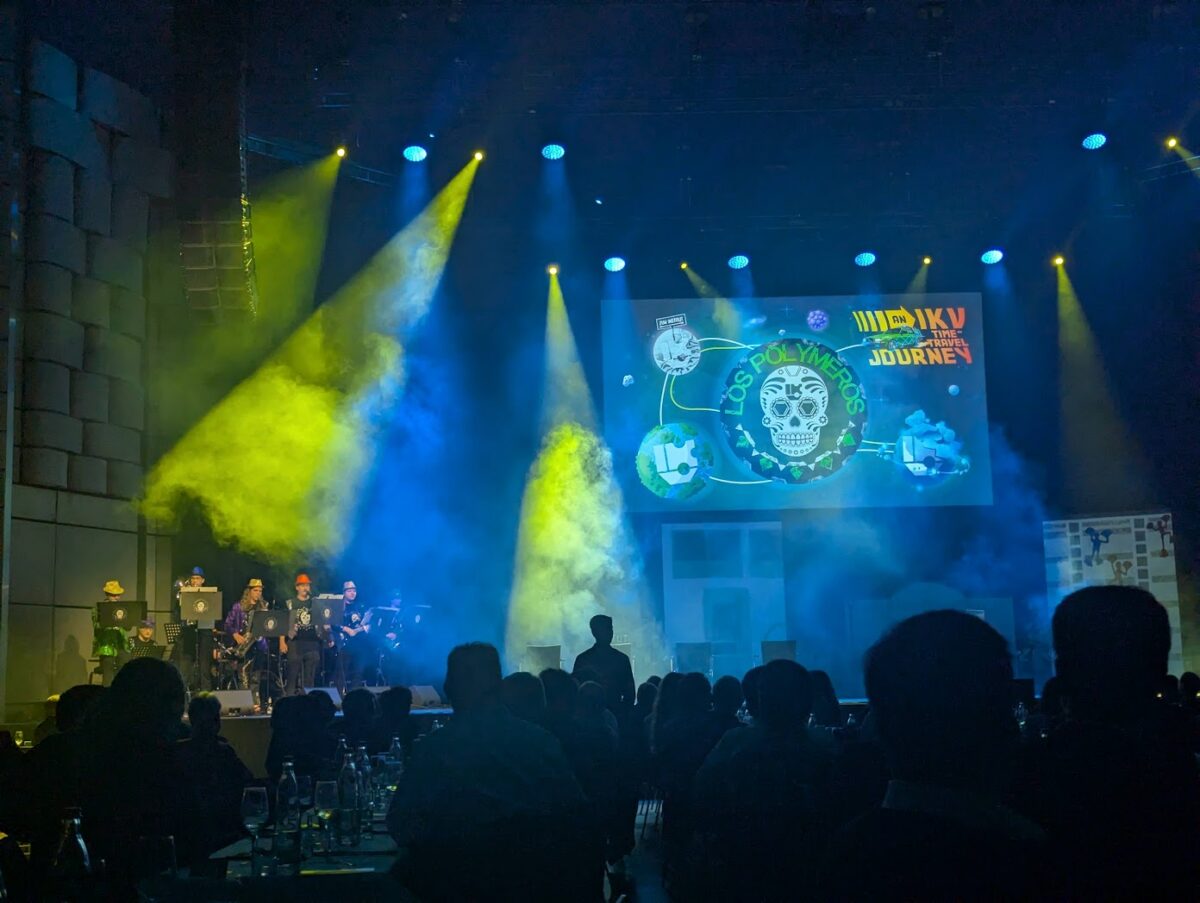
IKV Kolloquium 2026 shows how circularity, AI, and process excellence converge to accelerate a profitable, low‑impact plastics value chain.
Why IKV Still Matters
Since 1950, IKV has acted as a bridge between academia and the shop floor. Today, the strategy focuses on circular economy, digitalisation, lightweighting, and additive manufacturing. These themes also shaped the 2026 sessions and live demonstrations. The sponsors’ association includes hundreds of companies. Their support ensures trial lines and materials reflect real production constraints. This approach prevents idealised lab conditions from distorting results.
Highlights From Each Main Session
Additivation, de‑inking, coating: IKV showed why classic mechanical recycling now needs de‑inking and PECVD barrier layers to deliver packaging‑grade recyclates and hit EU 2030 targets. In practice, this closes the gap between post‑consumer films and contact‑sensitive uses. Evonik’s contribution on additive routes demonstrated how suppliers tune stabilisation and rheology for circular streams.
Circular products through foam injection moulding: By switching to foam‑IM with TPEs, teams can cut material, maintain haptics, and design for recyclability. Pöppelmann showed how to run recyclate feedstocks through foam processes without sacrificing soft‑touch surfaces.
Plastics for the hydrogen economy: Because hydrogen demand could rise roughly 10× by 2050 (≈75 Mt → ~793 Mt), electrolyser and BoP costs must collapse. Multi‑layer thermoplastic FRP pipes with inner plasma coatings point to up to 60% savings in system periphery versus steel, pushing hydrogen closer to cost targets. Meanwhile, Freudenberg highlighted sealing systems designed for aggressive H₂ environments.
Rubber compounding: Inline stepless pressure measurement along a slit channel detects wall slip and sharpens dispersion control, so processors can stabilise quality at lower mixing energy.
Robust injection moulding via adaptive control: Manufacturers want recyclate in high‑precision parts. Therefore, adaptive control and AI‑assisted set‑point tuning emerged as the practical route to hold tolerances despite feed variability.
Mechanical recycling of CFRP: Vitrimers as enablers — Vitrimer matrices with dynamic covalent bonds unlock repair, welding, and true material recycling of CFRPs. IKV presented vitrimer‑based CFRP sheets and end‑of‑life pathways; CTC (Airbus) discussed aviation‑grade circularity.
Polyolefin recyclate quality: Measured de‑inking efficiency on post‑consumer films strongly correlates with odor/colour outcomes and downstream film properties; it also dictates whether recyclate can re‑enter higher‑value packaging.
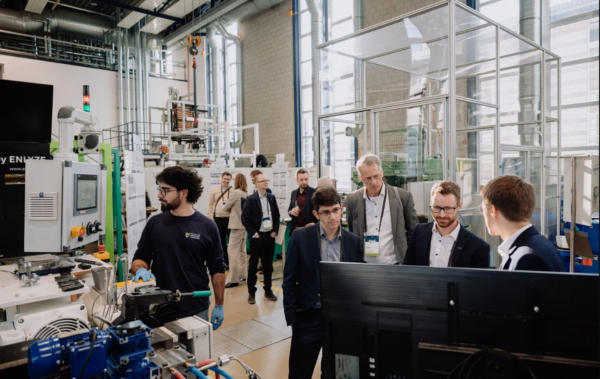 Since 1950, IKV has acted as a bridge between academia and the shop floor. Today the strategy focuses on circular economy, digitalisation, lightweighting, and additive manufacturing. These themes also shaped the 2026 sessions and live demonstrations. Photo Cortesy from IKV.
Predicting process‑dependent material behaviour: IKV’s AI‑augmented stiffness models and material maps for short‑fibre thermoplastics improve warpage and shrinkage predictions, which reduces loops between design and try‑out.
Extrusion for sustainable and bio‑based materials: Adaptive simulation and inline measurement in extrusion blow moulding stabilise wall‑thickness despite fluctuating recyclate properties, so lines keep spec without constant operator intervention.
AI in product development and simulation: Machine learning doesn’t replace physics; instead, it calibrates and complements established models. Teams reported faster gate‑to‑part decisions once microstructure predictions were linked to stiffness and warp models.
Polymer/metal and polymer/polymer hybrids: Hybrid structures deliver mass efficiency and functional integration; the session tied together adhesion, joining and simulation to keep dimensional precision in series tools.
Polyurethanes: processing and recycling: The PUR track echoed IKV’s ongoing symposia: digitalised foam processes, recycling options, and new chain extenders for circularity. Presenters from equipment makers and material suppliers showed how to retrofit existing foam lines.
Simulation for precise moulded parts: Data‑driven calibration plus better fibre‑orientation mapping tightened tolerances and cut trial shots, especially where gate sequencing and cooling interact.
Processing recyclates in film extrusion: The LOOPCYCLING consortium (20+ partners) pushes LDPE PCR towards higher‑grade film by combining improved sorting, de‑inking, and compounding with tuned extrusion recipes.
New strategies for 3D printing of technical parts: AM moved beyond prototyping; the focus sat on production‑oriented parameter sets, qualification, and hybrid workflows with injection moulding.
Laser beam welding: processing & modelling: Advances in modelling shrink the process window and make welded joints compatible with recyclate‑rich and hybrid designs, important for circular components that still need robust seals.
Plenaries that Framed the Week
Research Drivers for the Near Future
- LOOPCYCLING (LDPE films): upgrading PCR quality for film via an integrated chain approach.
- RezyPlas & PECVD barriers: plasma‑polymer migration barriers that enable recyclates in contact‑sensitive packaging.
- Swelling simulation + inline control: extrusion blow‑moulding with adaptive simulation to keep thickness on spec even with variable recyclate.
- AI design tools: ML‑based stiffness and warp prediction for short‑fibre thermoplastics.
- Hydrogen enablement: PolyH2Pipe multi‑layer FRP lines with plasma inner coatings for electrolyzer BoP cost reduction.
- Vitrimer CFRP: repairable, weldable, and material‑recyclable composite systems headed toward aviation and mobility pilots.
Save the date: IKV Colloquium 2028
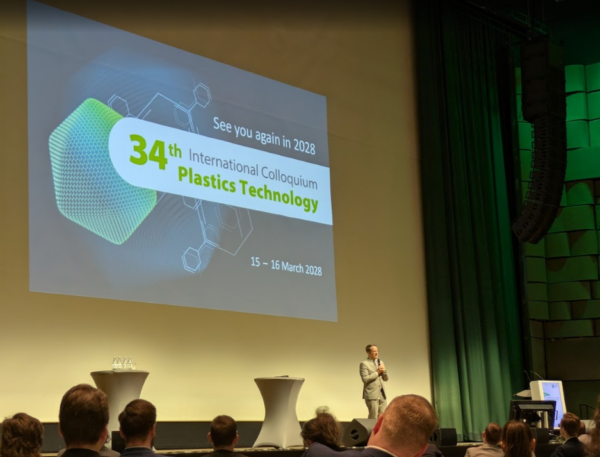
The Colloquium runs biennially. With the 33rd held in March 2026, the next edition will land between 15th and 16th March 2028 in Aachen. Photographer Andres Urbina From Plastics Engineering powered by SPE.
The Colloquium runs biennially. With the 33rd held in March 2026, the next edition will land between 15th and 16th March 2028 in Aachen. Therefore, block your calendar and watch for the official release.
To read more: Internationales Kolloquium Kunststofftechnik | IKV-Aachen