
How Recyclability is Redefining Packaging Form and Function

EPR mandates and monomaterial shifts are transforming packaging. Circular requirements now dictate structural design, material choice, and form.
In an era when less than 7% of materials used in the global economy come from recycled sources, the packaging industry faces a fundamental rethink of how products present themselves to the world. Design for recyclability represents the convergence of aesthetic intention, technical possibility, and systemic necessity.
You can also read: Flexible and Recyclable: Monomaterial Packaging Meets Sustainability Needs.
The Legislative Current
Extended Producer Responsibility (EPR) schemes are reshaping the packaging landscape across continents. These mechanisms make producers financially accountable for their packaging throughout its life cycle, particularly at the end of life. The principle operates through fee modulation, where packaging designed for efficient recycling carries lower costs than structures that complicate material recovery. The European Union’s Packaging and Packaging Waste Regulation, California’s SB 54, and evolving frameworks in Asia create a global mosaic of requirements that share common threads: minimize resource use and maximize recyclability.
Rethinking Structural Fundamentals
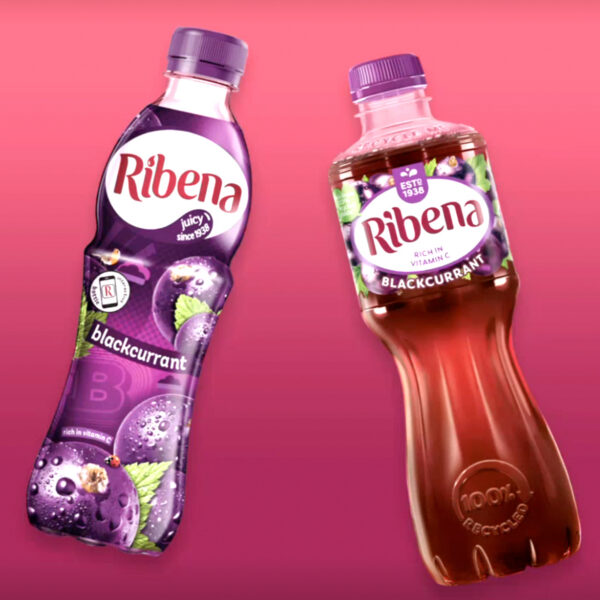
Reducing shrink sleeve coverage improves detection in optical sorting facilities while transforming the bottle itself into a primary brand asset. When labels occupy minimal surface area, embossed structural features and tactile treatments carry identity through the container’s form. Brands discover that less label coverage often creates more distinctive shelf presence through sculptural honesty and material authenticity. Design by Elmwood.
The most profound shifts emerge not from revolutionary technologies but from questioning established assumptions. Monomaterial packaging structures eliminate the separation challenges that doom multi-material formats to landfill. Recyclable plastic innovations demonstrate how material science can align with recovery infrastructure when design intent focuses on end-of-life realities from the outset.
Resource optimization offers dual benefits. Lighter-gauge materials, reduced componentry, and minimized overall pack dimensions translate into lower costs while supporting sustainability goals. This creates space for brands to invest in integrating recycled content, which remains essential despite ongoing quality concerns about contamination and aesthetic consistency.
The Infrastructure Reality
Acknowledging that global end-of-life infrastructure cannot yet cope with current waste volumes transforms design for recyclability from a compliance exercise into an innovation imperative. Successful packaging must navigate what recovery systems can actually handle today while anticipating expanded capabilities tomorrow. This means designing for mechanical recycling streams that exist now, incorporating recycled content as supply chains mature and maintaining brand integrity throughout.
The renaissance across packaging suppliers, from plastics manufacturers to metal and glass producers, reveals an industry investing heavily in accessible solutions. Material innovations emerge not for premium brands alone but as scalable options that smaller organizations can deploy. The democratization of recyclable packaging technologies represents perhaps the most significant unlock in achieving systemic change.
Balancing Today and Tomorrow

The shift from multi-layer flexible sachets to monomaterial plastic pots eliminates recycling complications while elevating the consumer experience. These fully recyclable formats improve product preservation, enable cleaner serving, and support better portion control. The transformation demonstrates how recyclability requirements can catalyze premium repositioning, creating functional and emotional benefits beyond environmental compliance. Design by Touch.
Design for recyclability succeeds when it honors complexity without surrendering to it. Every structural decision carries implications: how materials combine, how consumers dispose, how recovery facilities sort, how recycled content performs in next-generation applications. The brands leading this transformation recognize packaging as the most tangible expression of environmental commitment, visible to consumers at the moment of disposal.
As regulatory frameworks tighten globally, the packaging that survives will be that which was conceived with its afterlife in mind. This represents not merely compliance but a philosophical shift in how we understand a container’s purpose. Design for recyclability reveals that the end of one package’s journey must become the beginning of another’s.