Digitalization to Improve Productivity
Plastic manufacturing data analytics shifts quality control upstream. Real-time monitoring and AI improve OEE and identify root causes before defects occur.
This second installment of a three-part series explores how digitalization and data analysis impact quality control and productivity monitoring. While data has been available in machinery for years, the true breakthrough occurs when processors use this information to support decision-making.
You can also read: Tooling Digitalization: Basics.
Specifically, modern control systems now transform raw data into intelligence to solve problems before they occur or warn operators about impending defects.
Tracking OEE and Machine Status
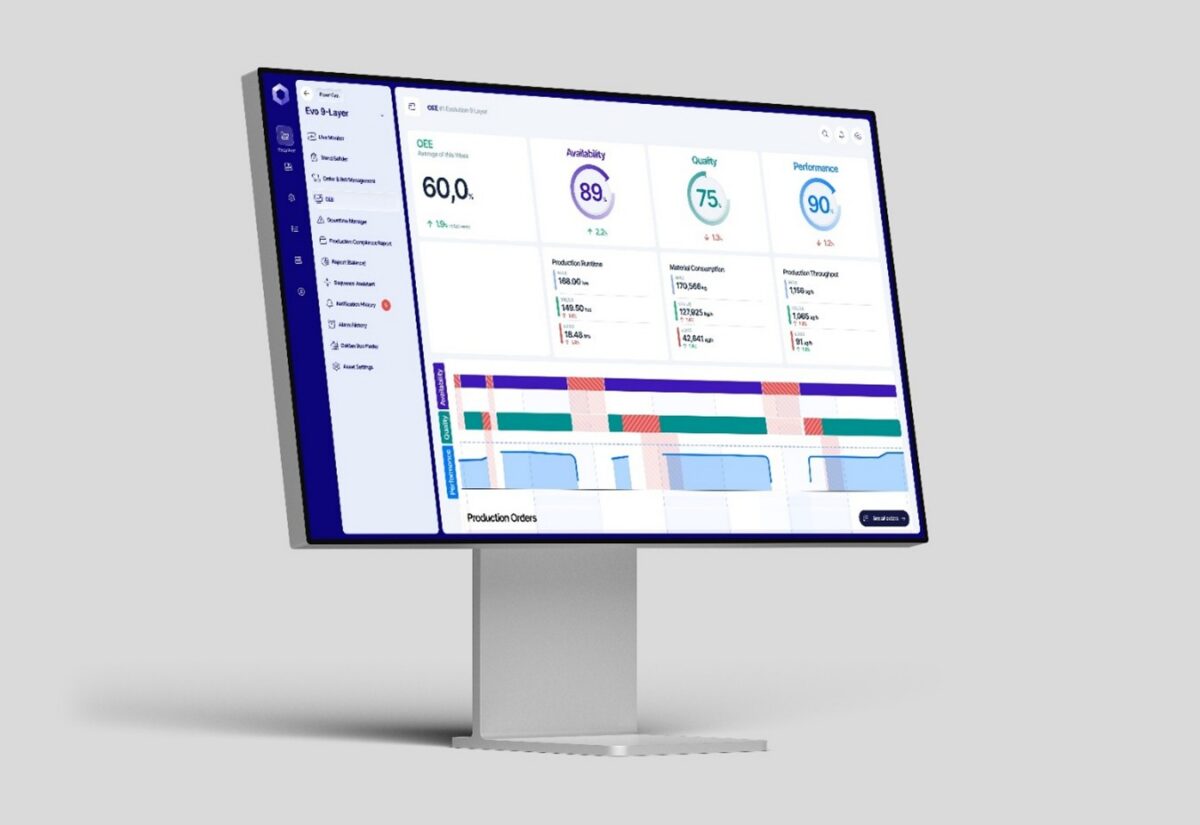
Reifenhäuser, a German manufacturer of extrusion lines, has developed the NEXT platform to integrate industrial AI and real-time data monitoring. Consequently, the company can now track production variables and display them in a centralized dashboard. Data points such as throughput, energy consumption, and machine status are readily available for correlation.
Through NEXT, the company aims to reach the full potential of production data with the data tool. Because extrusion processes generate large volumes of raw data, this approach uses real-time analytics to drive productivity. Furthermore, the tool includes automated OEE analysis that provides information on availability, performance, and quality.
A similar approach exists for injection molding. For instance, Sumitomo Demag and Arburg demonstrated monitoring tools at the last K Show that track production plans directly on the machine. In this way, operators can view the progress of a production order, identify defective parts, and monitor essential KPIs like energy efficiency in kWh/kg.
Data for Upstream Quality Control

The Umbrella of AI Services from Engel covers production, service, part design, and part sampling. Image courtesy of ENGEL.
As a pioneer in digitalization, ENGEL has offered 4.0 solutions like adjustable clamping force and automatic flow regulation for years. Now, the company integrates software that tracks data to monitor machinery conditions transversally. Notably, their “Inject AI” umbrella covers technologies that use data to improve production quality and troubleshoot systems.
Data usage starts during the sampling of injection molds to establish the best possible process. Additionally, this data communicates with part design software to assess injection profiles virtually. To further improve productivity, the iQ process observer gathers over 1,000 parameters in real time. By acknowledging deviations and providing recommendations, the system reduces quality variations before they result in scrap.
The Upstream Mind Shift
The system compares all target and actual values with a defined reference, similar to a traditional quality control process. However, the main advantage here is that the recognition of quality issues occurs online. As a result, operators can correct the root causes of problems directly in the machine instead of inspecting components after they are molded. Ultimately, this shifts quality management one step upstream, ensuring dimensional stability and preventing flow marks before the cycle finishes.