Geolectric Lantern: Rethinking Electronics Enclosures Beyond Plastics
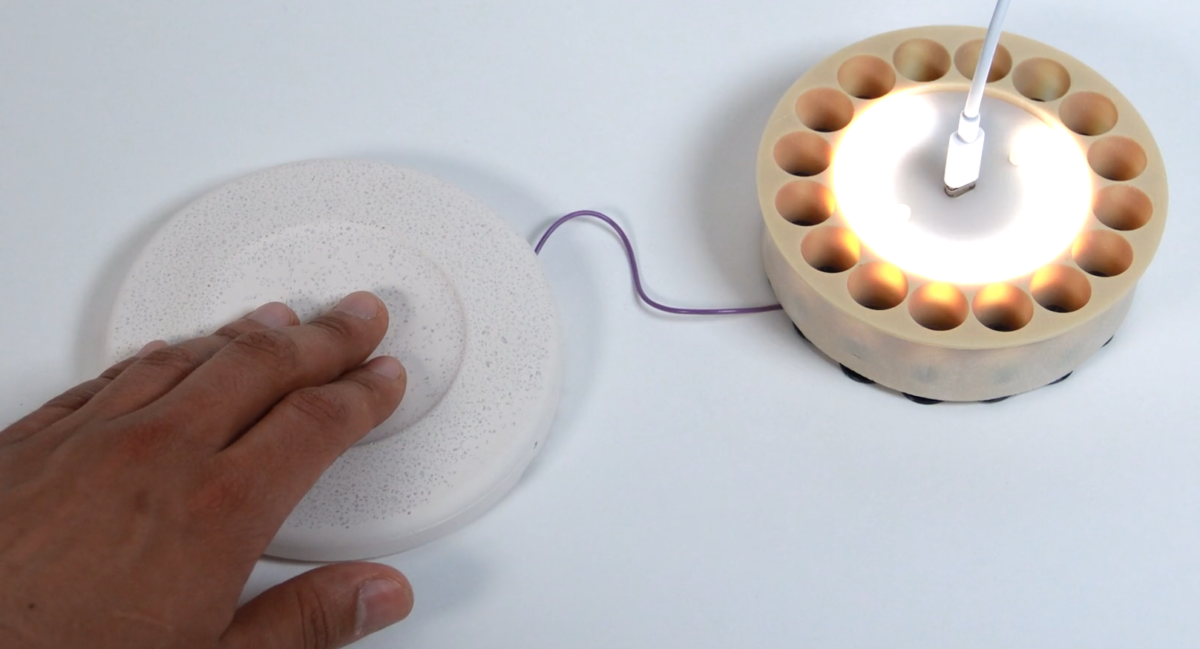
The Geolectric lantern shows how enclosure materials affect repairability, safety chemistry, and end-of-life pathways in electronics.
Global consumer electronics markets face intensifying sustainability pressure. Electronic waste hit a record 62 million tonnes globally in 2022, making it the fastest-growing waste stream worldwide. Projections indicate volumes will reach 82 million tonnes by 2030, driven largely by rising consumerism, shorter product lifecycles, and increasing embedded electronics.
You can also read: Nano Molding: The Future of Metal-Plastic Integration in Electronics.
Despite this growth, only about 22% of global e-waste is formally collected and recycled, leaving the majority unmanaged. This creates significant environmental and health risks from hazardous substances, such as lead, mercury, and brominated flame retardants, that are commonly found in electronic components.
At the product level, enclosures and housings account for a substantial share of material mass and embodied carbon. Plastics typically represent 20 to 25% of consumer electronics by weight, yet recovery rates for these polymers remain low.
Meanwhile, policy drivers such as the EU Right to Repair and the Ecodesign for Sustainable Products Regulation now require longer lifespans, improved repairability, and clearer end-of-life pathways. Together, these pressures compel manufacturers to reassess enclosure strategies for user-facing electronics.
Why the Geolectric Lantern Matters to End-User Markets

Geolectric Lantern with embedded touch sensors. Courtesy of MIT Design Intelligence Lab.
The Geolectric lantern developed at the MIT Design Intelligence Lab offers a practical case study. Unlike conceptual design work, the lantern functions as a complete lighting product with embedded sensors and electronics. It targets a familiar end-user category. Domestic lighting products already face expectations around safety, longevity, and aesthetics. The lantern, therefore, provides a relevant test platform for evaluating alternative enclosure strategies under real-world consumer-use conditions.
Product Architecture and User Interaction
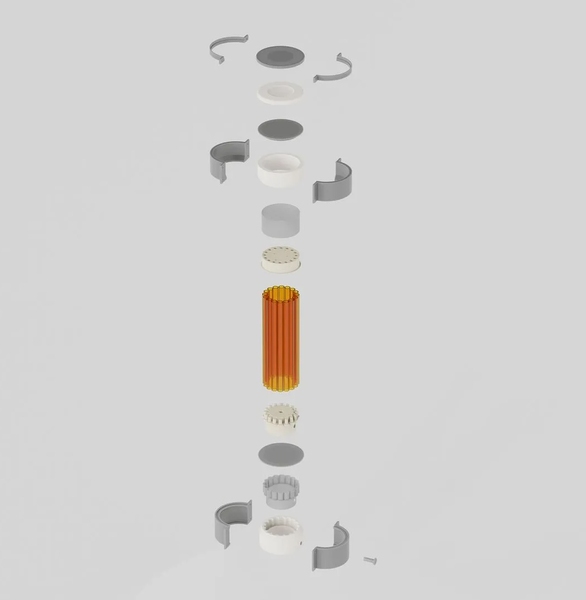
Exploded diagram of Geolectric Lantern. Courtesy of MIT Design Intelligence Lab.
The lantern comprises two geopolymer pieces connected by a ribbed glass tube that houses LEDs. A proximity and touch sensor embedded in the upper section controls light intensity. From a user perspective, the interaction remains intuitive and minimal.
From a sustainability perspective, the architecture eliminates fasteners, adhesives, and multi material joints common in plastic housings. Electronics are embedded during material curing rather than installed afterward. This approach directly affects assembly complexity, repair strategy, and product lifespan.
Sustainability Performance at the Product Level
At the end-user market level, sustainability performance depends on measurable outcomes. The Geolectric lantern avoids high temperature firing during production, reducing energy demand compared with ceramic housings.
Unlike conventional plastic enclosures, the material does not rely on flame retardant additives to meet fire safety requirements. The product also demonstrates material longevity suitable for extended indoor use, aligning with regulatory expectations for durable goods. These factors contribute to reduced lifecycle emissions and improved compliance potential in regulated markets.
Manufacturing and Scalability for Electronics Producers
From a commercial standpoint, the lantern highlights both opportunities and constraints. Casting replaces injection moulding, lowering tooling complexity but increasing cycle times. This positions the approach for low to medium volume electronics or premium segments rather than mass commodity devices.
For electronics brands targeting differentiated, long-life products, the trade-off between throughput and sustainability becomes acceptable. The case study shows that alternative production routes can still support repeatable manufacturing when aligned with market positioning.
Repairability and End-of-Life Considerations
End-of-life handling remains critical for electronics markets. Embedding electronics simplifies assembly but requires planned access for repair or removal. The lantern illustrates the need for modular electronic inserts or defined separation points.
Once electronics are removed, the remaining structural material behaves as inert mineral waste and can be reused as aggregate or filler. While not recyclable in the thermoplastic sense, this pathway avoids microplastic generation and hazardous additive release, supporting circular economy goals.
Transferability Across Consumer Electronics Categories
The Geolectric lantern does not suggest universal replacement of plastic enclosures. Instead, it defines clear boundaries for adoption. Stationary consumer electronics such as lighting, network hardware, smart home hubs, and indoor sensors align well with this approach. Portable, impact exposed devices remain better served by polymers. As a case study, the lantern provides electronics manufacturers with a decision framework rather than a single solution.