Fraunhofer Turns Contaminated Packaging Waste into Textile-Grade Fibers
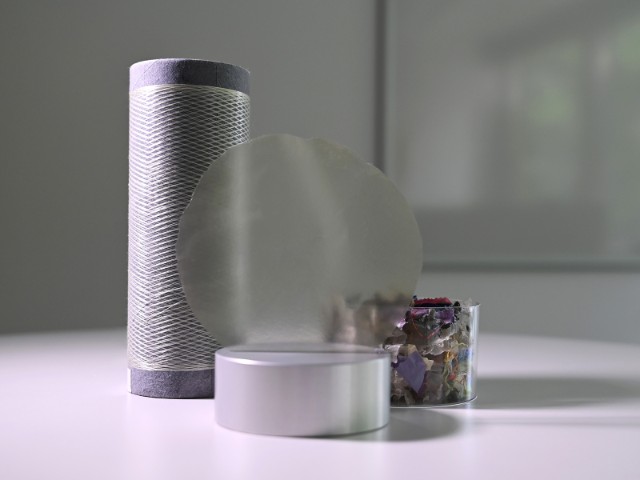
Fraunhofer validates solvent and glycolysis routes that convert contaminated packaging waste into textile-grade PP and PET fibers.
The European Union generated 18.5 million tonnes of post-consumer packaging waste in 2022. Only 38% were recycled, 45% were sent for energy recovery, and 17% were sent to landfills. These rates fall substantially short of the 55% recycling target mandated by 2030 under the EU Packaging and Packaging Waste Regulation.
You can also read: Recycled Polyurethane Gives New Life to Insulating Mortars
Filament production requires contaminant-free feedstock that mechanical processes cannot deliver from heavily contaminated mixed waste streams. Researchers at the Fraunhofer Cluster of Excellence Circular Plastics Economy have demonstrated that solvent-based recycling and chemical depolymerization enable the production of textile-grade recyclates from packaging waste previously destined for incineration.
Technical Barriers in Melt Spinning Recyclates
Conventional recyclates fail in melt-spinning operations because fiber extrusion imposes stringent requirements on material homogeneity and purity. Feedstock must flow uniformly through capillaries with diameters of tens of micrometers during the extrusion process. Foreign polymer fractions as low as 2-5% can cause defects in extruded filaments. These defects act as weak points under the high tensile forces applied during post-extrusion drawing. Production lines incur costly shutdowns when broken filament bundles necessitate replacing yarn guides. Injection molding processes tolerate contamination levels between 5 and 10% that completely halt continuous fiber spinning operations. Processing temperatures between 220°C and 280°C accelerate the degradation of residual additives and thermally unstable polymer chains in mechanically recycled materials.
Selective Dissolution Achieves Textile-Grade rPP
The Fraunhofer Institute for Process Engineering and Packaging applied solvent-based recycling to mixed post-consumer plastic film waste. The input material contained only 33% polypropylene, with 67% foreign plastics and contaminants. The waste composition included 10% polyethylene, 7% polystyrene, 10% polyamide, 23% polyethylene terephthalate, and 11% insoluble non-plastic materials. Selective dissolution removed non-polyolefin plastics, printing inks, paper fibers, and degraded additives through targeted solvent extraction. The process achieved 80% reduction in foreign polymer content across all contaminant categories. Residual polyethylene content measured below 2% in the purified recyclate stream.
The Fraunhofer Institute for Applied Polymer Research processed recovered rPP into multifilament yarn containing 32 individual filaments using pilot-scale melt spinning equipment. The recyclate exhibited stable melt flow properties and high stretchability during drawing to the microfiber range below 1 dtex per filament. Post-stretched yarn samples demonstrated 42.1 cN/tex specific tensile strength and 58.4% elongation at break. The elastic modulus reached 454.1 cN/tex. These mechanical properties meet specification requirements for technical applications including filtration media, tufted carpets, artificial turf backing, and nonwoven geotextiles. Cast film production from identical recyclate feedstock showed zero visible particulate contamination with only slight amber discoloration.
PET Glycolysis Enables Monomer Recovery
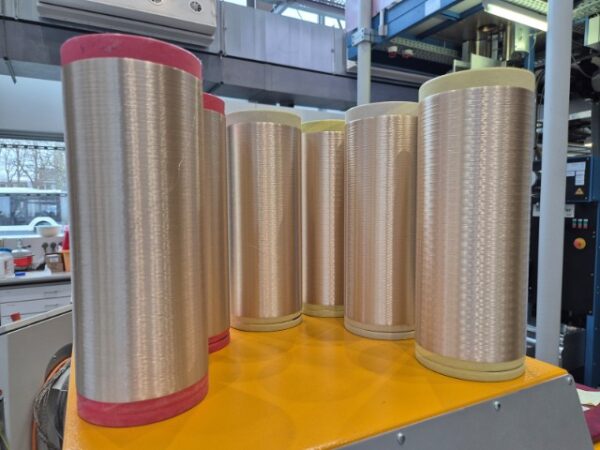
Multifilament yarn made from 100% recycled PP. Courtesy of Fraunhofer IVV.
The Fraunhofer Institute for Chemical Technology processed PET packaging waste through glycolysis without mechanical pre-sorting or washing steps. The mixed PET 90/10 fraction contained 87% polyethylene terephthalate with 13% heterogeneous contaminants including polypropylene, polyvinyl chloride, paper labels, and aluminum components. This waste fraction currently undergoes incineration because contamination levels exceed mechanical recycling tolerance thresholds.
Glycolysis applies ethylene glycol at elevated temperature to cleave ester bonds and depolymerize PET into bishydroxyethyl terephthalate monomer. The waste stream achieved near-complete conversion to BHET. Insoluble contaminants separated through filtration after the depolymerization reaction reached completion.
Recrystallization of crude rBHET removed dissolved foreign substances and residual additives to achieve monomer purity exceeding 98%. The Fraunhofer Institute for Applied Polymer Research repolymerized purified monomer into recycled PET and extruded 48-filament yarn on pilot melt spinning lines. The repolymerized rPET demonstrated excellent spinning stability across continuous production runs exceeding four hours. Material stretchability enabled drawing to microfiber dimensions below 1 dtex per filament. Stretched yarn exhibited 45.1 cN/tex specific tensile strength and elastic modulus of 774.7 cN/tex. These property profiles align with virgin PET specifications for apparel textiles, tent fabrics, and automotive upholstery applications.
Biodegradable Alternatives for Temporary Applications
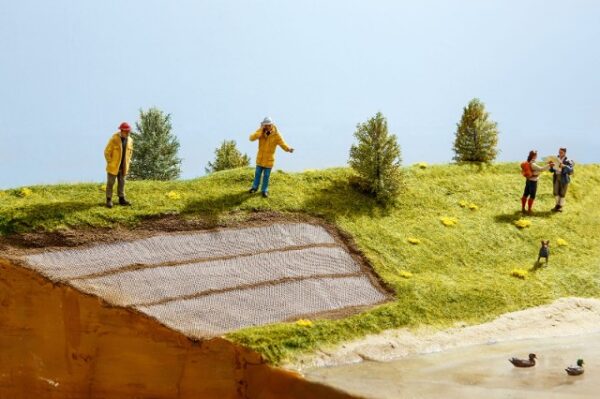
The Fraunhofer Institutes place strong emphasis on the practical application of new developments, as shown here in the use of geosynthetics for riverbank stabilization. Courtesy of Fraunhofer LBF/Raapke.
The Fraunhofer consortium developed controlled-degradation geotextiles from polylactide and polybutylene succinate for temporary infrastructure stabilization. Target applications include slope erosion control, riverbank reinforcement, and construction site access roads requiring functional lifespans under 10 years.
Researchers conducted accelerated degradation testing by storing fiber samples at 40°C and 90% relative humidity in moist soil for 25 weeks. Proprietary additive packages developed by the Fraunhofer Institute for Structural Durability and System Reliability controlled degradation onset timing and accelerated breakdown progression after the functional service period. Fiber tensile properties remained within specification throughout the intended use phase before rapid degradation began. Ecotoxicity testing by the Fraunhofer Institute for Molecular Biology and Applied Ecology detected no adverse effects on soil organisms or aquatic species from fiber degradation products.
Life Cycle Performance and Scale-Up Requirements
Aggregated life cycle assessment results demonstrated that both recyclate-based and biopolymer production routes deliver superior climate performance compared to virgin plastic manufacturing. The carbon footprint reduction ranged from 35 to 50% depending on energy sources and transportation distances.
Material flow analysis identified sufficient polypropylene and polyethylene terephthalate quantities in existing European waste streams to supply fiber production at commercial scale. However, dedicated logistics infrastructure and automated sorting systems require capital investment to access these streams efficiently. The European roofing underlayment market installs several hundred million square meters annually. This established market provides sufficient volume to support commercial deployment of recyclate-based nonwoven products.
The Fraunhofer CCPE project validated the complete value chain from waste collection through final product manufacturing at pilot scale. Advanced recycling technologies complement mechanical processing rather than competing with existing infrastructure. Solvent-based recycling economically processes contamination levels between 30 and 70% that render mechanical recycling technically infeasible. Chemical depolymerization accepts heterogeneous waste streams currently diverted to energy recovery facilities. Integration of these complementary approaches enables true circular material flows with optimized resource recovery across the full spectrum of packaging waste compositions.