EU PFAS Restriction Update: ECHA Consultation in 2026
The European Chemicals Agency (ECHA) met to re-evaluate its 2023 proposal regarding per- and polyfluoroalkyl substances (PFAS).
In December 2025, the EU Risk Assessment Committee (RAC) and Socio-Economic Analysis Committee (SEAC) met to evaluate current PFAS regulations. These committees are part of ECHA, which implements the EU’s chemical legislation. In 2023, ECHA released a proposal outlining PFAS restrictions, aiming to make them effective in 2026 or 2027. Proposal evaluation has been a continuous effort, and last month’s meeting resulted in an expansion of these regulations.
You can also read: PFAS Contamination Tests the Limits of UK Policy
Horizontal Issues: Fluoropolymers, Emissions, and Waste
The RAC and SEAC’s December meeting was intended to examine horizontal issues in the PFAS landscape across industries. Because many products incorporate PFAS into their manufacturing processes, regulation affects a variety of sectors. RAC establishes which PFAS are subject to regulation, as well as their hazards, risks, and concentration limits. Decision-makers also consider the enforceability and the monitoring of the progress of restrictions. SEAC focuses more specifically on how regulation can impact trade and competitiveness. By meeting collaboratively, these committees can gain a holistic understanding of PFAS regulation.
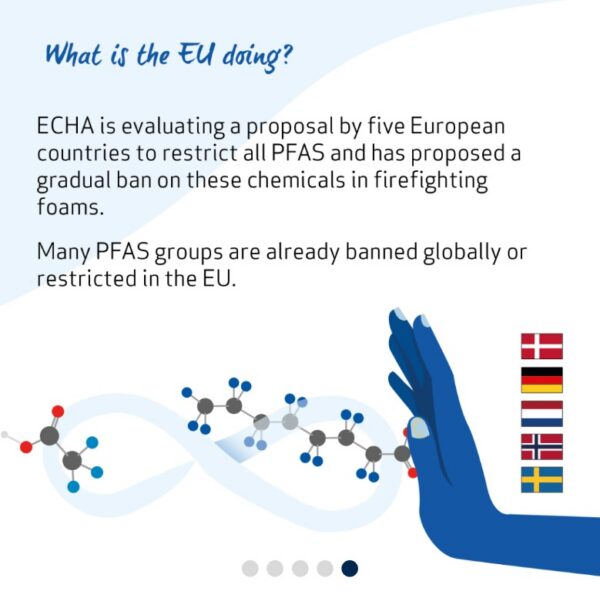
Denmark, Germany, the Netherlands, Norway, and Sweden assessed over 5,600 scientific and technical comments to prepare the ECHA proposal revision. Image courtesy of ECHA.
Key focuses of the RAC included emissions estimations in the PFAS lifecycle, specifically for fluoropolymers and the waste stage. They also proposed additional regulatory risk management options, including site-specific PFAS management plans. This includes benefits like derogations and incentives for substituting non-PFAS materials during manufacturing. RAC also proposed that certain sectors be excluded from the PFAS restriction.
Sectors affected by alternative restriction options include:
- PFAS manufacturing
- Transport
- Electronics and semiconductors
- Energy
- Sealing applications
- Machinery applications
- Technical Textiles
Guided by stakeholder expertise, the SEAC finalized its conclusions for the electronics and semiconductor sector as part of this meeting.
Added Sectors and Changed Scope Since 2023
RAC and SEAC’s evaluation resulted in the identification of additional sectors not included in the original 2023 proposal. These include:
- Broader industrial uses, such as solvents and catalysts
- Explosives
- Machinery applications
- Military applications
- Additional medical applications (i.e., packaging and excipients)
- Printing applications
- Sealing applications
- Technical applications
RAC and SEAC will not be conducting a sector-specific evaluation of these eight sectors. Instead, these committees are asking subject matter experts to provide comments on aspects of the evaluation, including these additional sectors.
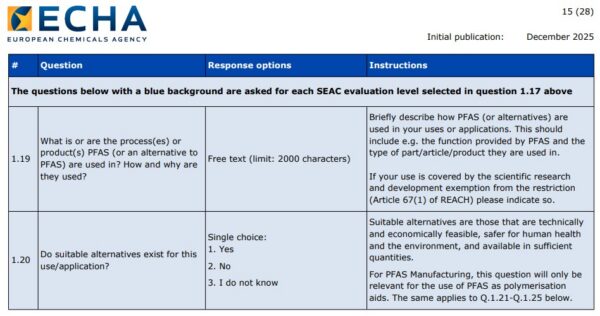
SEAC is collecting information regarding analysis of alternatives, costs, and benefits to guide the committee’s decisions. Image courtesy of Consultation on the SEAC draft opinion on restricting per- and polyfluoroalkyl substances PFAS) – Guidance for respondents.
Timeline: March 2026 Meeting and the 60-Day Consultation
The committees plan to reconvene in March 2026. In these meetings, they plan to finalize the discussion and adoption of RAC’s option. They will also discuss and come to agreement on SEAC’s final draft option. Following acceptance of the draft option, a 60-day stakeholder consultation will begin. The European Commission and EU Member States will then make the final decision on the PFAS restriction.