
Biodegradable Polymer Blends: Key Findings and Future Outlook

Biodegradable polymer blends strengthen and diversify sustainable applications in packaging, agriculture, and medicine.
As industries work to reduce dependency on fossil‑based plastics, these innovative blends offer a powerful alternative that improves performance, reduces environmental impact, and moves us closer to a circular economy.
You can also read: SABIC Makes Polycarbonate From Mixed Recycled Plastics
Biodegradable polymers such as PLA, PBAT, PBS, PHB, PHBV, and TPS each provide unique advantages. However, when used alone, they often face limitations like brittleness, low heat resistance, or poor processability. Because of this, researchers increasingly combine these polymers into blends that create stronger, more flexible, and more functional materials.
The importance of Blending Biodegradable Polymers
Blending enables developers to combine the strengths of multiple polymers while minimizing their weaknesses. For example, PLA offers excellent strength and clarity, but it tends to be brittle. Meanwhile, PBAT delivers remarkable flexibility. When they are blended, manufacturers obtain a tough, flexible, and compostable material ideal for packaging and film applications.
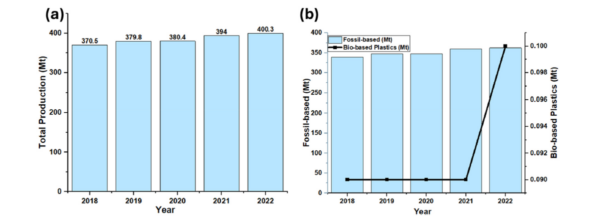
(a) Global plastic production from 2018 to 2022, (b) global plastic production by polymer type from 2018 to 2022. Data adapted from Plastics Europe 2023 report https://plasticseurope.org/knowledge-hub/plastics-the-fast-facts-2023/ accessed January 4, 2025. (Green Chem., 2025, 27,11656)
Moreover, blends allow for fine‑tuning degradation rates. This becomes essential for products such as agricultural mulch films or biomedical implants, which must break down at specific times.
Improving Performance Through Compatibilization
Even though blending is beneficial, many biodegradable polymers are naturally immiscible. Without intervention, they phase‑separate and lose mechanical performance. To solve this, researchers add compatibilizers like maleic anhydride, Joncryl, epoxidized soybean oil, PEG, or dicumyl peroxide. These additives strengthen interfacial adhesion, promote uniform dispersion, and significantly boost the durability and toughness of the final material.
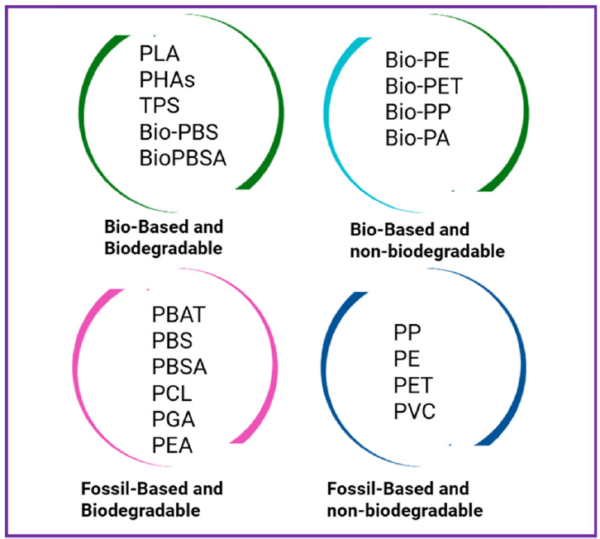
Classification of polymers based on origin and biodegradability. (Green Chem., 2025, 27,11656)
Additionally, reactive extrusion methods help compatibilizers bond polymers in real time, increasing miscibility and creating blends with superior structural integrity.
Enhancing Biodegradable Blends with Natural Fillers
To take performance even further, many polymer blends incorporate naturally derived fillers such as:
- rice straw
- coffee grounds
- cinnamon or turmeric powder
- bamboo or jute fibers
- cellulose nanocrystals
- biochar
These fillers not only reinforce mechanical strength but also increase biodegradability and reduce environmental impact. For instance, spent coffee grounds can enhance crystallization in PLA‑based blends, while jute fiber dramatically improves tensile strength and impact resistance.
Applications: From Packaging to Biomedicine
Because biodegradable polymer blends combine strength, flexibility, and compostability, they are now used across multiple sectors.
1. Packaging
Food packaging benefits the most. Blends with natural fillers and nanoparticles create high‑barrier films that resist oxygen, moisture, and UV light. Some blends even offer antimicrobial or antioxidant effects, giving packaged food a longer shelf life.
2. Agriculture
In agriculture, mulch films made from PLA, PBAT, PHAs, or modified starch degrade directly into the soil. Unlike traditional polyethylene films, these leave no harmful residues and reduce labor and disposal costs.
3. Biomedical Engineering
Biodegradable blends also excel in medical applications. PLA‑ and PHA‑based blends are used for:
- scaffolds for tissue regeneration
- controlled drug-release systems
- temporary implant materials
These materials degrade safely in the body, eliminating the need for surgical removal.
Moving Toward a Circular Economy
As industries adopt circular strategies, biodegradable polymer blends play a critical role. They reduce reliance on fossil resources, enable renewable feedstock usage, and add value to agricultural and food waste streams.
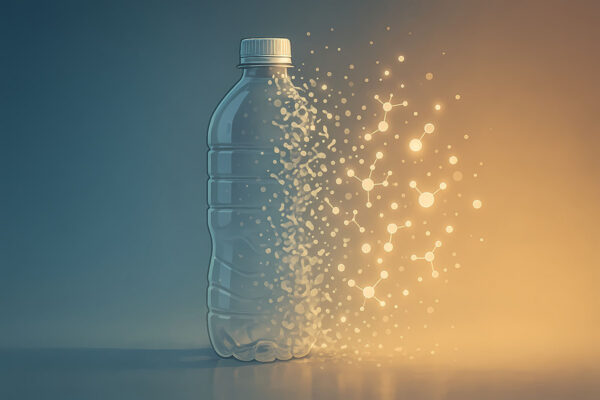
Biodegradable polymer blends represent one of the most promising materials in modern sustainability efforts. They combine tailored performance with environmental responsibility, opening doors in packaging, agriculture, medicine, and beyond.
However, recyclability remains a challenge. Since blends often combine chemically different polymers, mechanical recycling becomes more complex. Even so, researchers are developing dynamic covalent networks and chemical‑recycling processes that will allow these materials to return to monomers and re‑enter production cycles.
Biodegradable polymer blends represent one of the most promising materials in modern sustainability efforts. They combine tailored performance with environmental responsibility, opening doors in packaging, agriculture, medicine, and beyond. As compatibilization and filler technologies advance, these blends will continue to drive innovation and play a vital role in achieving a cleaner, circular future.
To read more: Recent advances in biodegradable polymer blends and their biocomposites: a comprehensive review