Recycled Polyester Textiles for Injection-Molded Products

Researchers have developed a method for recycling post-consumer garments into injection-molding materials.
Every year, the textile industry generates approximately 58 million tons of plastic waste. This amount continues to increase, with only 1% of clothes recycled globally. Textile recycling poses a slew of challenges, including sorting mixed fibers and developing processes better suited to textiles. To overcome these challenges, researchers are developing new recycling methods to manage textile waste on an industrial scale.
You can also read: MacroCycle’s Molecular Approach to PET and Polyester Recycling.
Challenges of Textile Recycling
Many consumer goods, including textiles and packaging such as water bottles, are composed of poly(ethylene terephthalate) (PET). Nevertheless, the process for producing PET for textiles differs than other goods. This results in PET with a lower molecular weight and higher crystallinity. Thus, effective textile recycling processes may require additional design considerations. Additional challenges include:
- Material Sorting: Textiles are often comprised of PET mixed with cotton or other synthetic polymers. Recent research has shown that sorting techniques leveraging spectroscopy and artificial intelligence (AI) can more effectively sort textiles. This results in a recycled product with better mechanical properties.
- Compaction: Increased temperature and pressure, followed by grinding, can increase the density of textile PET material. This results in flakes of material.
- Compounding: During compounding, PET often results in a material with a very high fluidity, making it difficult to extrude into pellets.
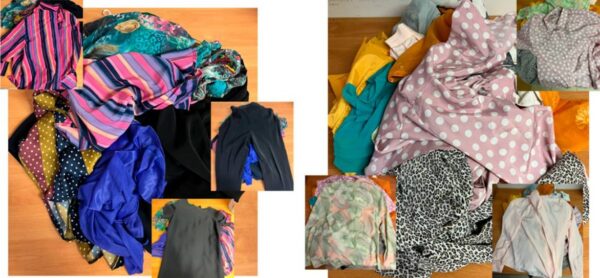
PET is the most widely used synthetic material in the textile industry. Figure courtesy of Recycling Textiles: From Post-Consumer Polyester Garments to Materials for Injection Molding.
Methodology Development
Researchers developed a method for textile compaction without grinding, pulverization, shredding, or drying. This process results in PET flakes that manufacturers can directly feed into extruders.
To begin, researchers sorted post-consumer garments into light and dark colors, then removed all rigid components, such as zippers. Then, they carried out Spin-PET’s patented method for compacting and reducing textiles into rigid flakes. After flake production, researchers dried the flakes at 150 °C for three hours to prevent hydrolytic degradation. Researchers then extruded the flakes in a single-screw extruder, producing samples for characterization. The resultant samples exhibited densities similar to, or higher than, those from PET bottles or other rigid containers.
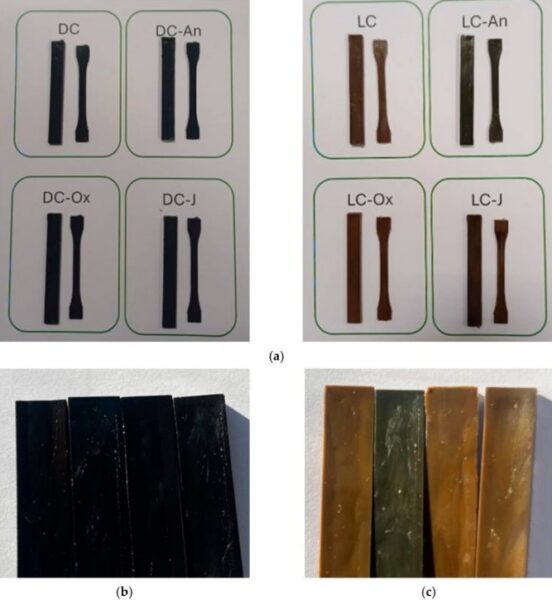
This method successfully produced recycled PET specimens from post-consumer textiles. Figure courtesy of Recycling Textiles: From Post-Consumer Polyester Garments to Materials for Injection Molding.
During characterization, the light- and dark-colored specimens resulted in different material properties. For example, melt volume rate (MVR) and melt flow rate (MFR) increased from light to dark colors. This highlights the importance of sorting textiles by color during the recycling process.
A New Recycling Pathway for Garments
This study introduced a method for recycling post-consumer garments into higher-density plastic pellets suitable for injection molding. Manufacturers widely use injection molding for a variety of consumer goods, making this a promising recycling pathway for textiles. Because textiles are a major source of microplastics, this method can replace waste textiles with products with higher thickness. This may reduce the amount of microplastics released from post-consumer fibers. This method requires a substantial supply of polyester garments. Better management of post-consumer garments on a global scale can direct waste textiles towards recycling, rather than the landfill.