
How Private Labels Embody Store Identity

How private-label packaging systems balance brand coherence, differentiation, and material constraints across diverse retail categories.
In supermarket aisles where hundreds of products compete for attention, private-label packaging serves a fundamentally different purpose than branded packaging. These containers don’t establish independent identities. They embody the retailer’s personality, transforming abstract values into tangible experiences that customers can hold. Every jar, bottle, and box becomes a physical extension of the store’s promise.
You can also read: Top 5 Additives for Packaging Production.
This creates a unique challenge in package development. Where traditional brands build recognition through repetition across limited product lines, private labels must maintain coherence across hundreds of disparate categories while allowing each product to communicate its specific purpose.
The Duality of Familiarity and Distinction
Successful private label systems navigate inherent contradictions. They require consistency that builds recognition without monotony across vast portfolios. The design architecture must feel familiar enough to signal trust while being distinctive enough to compete with category leaders. Materials must communicate quality without premium pricing, broadness without blandness.
Please consider the technical implications. A single design system might encompass rigid bottles for beverages, flexible films for snacks, injection-molded closures for personal care, and thermoformed trays for prepared foods. Each format demands different material formulations, processing parameters, and decoration techniques, yet all must express a unified set of brand values.
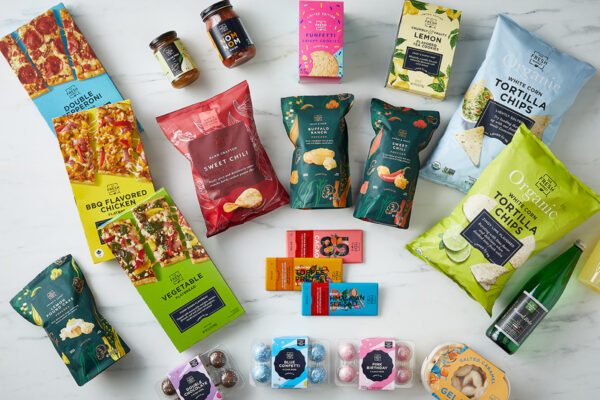
The Fresh Market’s private label system demonstrates how design architecture can translate culinary philosophy into visual language. The brand’s packaging approach transforms specialty food positioning into coherent identity across 160 locations, proving that private labels can lead category innovation rather than follow established brands. Design by Equator.
The Architecture of Visual Coherence
Creating systems that span diverse product categories requires thinking beyond individual packages. The challenge lies in establishing a visual language flexible enough to accommodate everything from pantry staples to specialty items while maintaining unmistakable coherence. Color hierarchies, typographic systems, and structural cues must work together to signal both category and brand simultaneously.
When private labels expand across regions and markets, this complexity multiplies. A single system might need to communicate premium positioning in metropolitan centers while conveying accessibility in regional markets, all without fragmenting into disconnected visual identities. The design framework becomes a living architecture that adapts to local needs while preserving core values that customers recognize regardless of geography or product type.
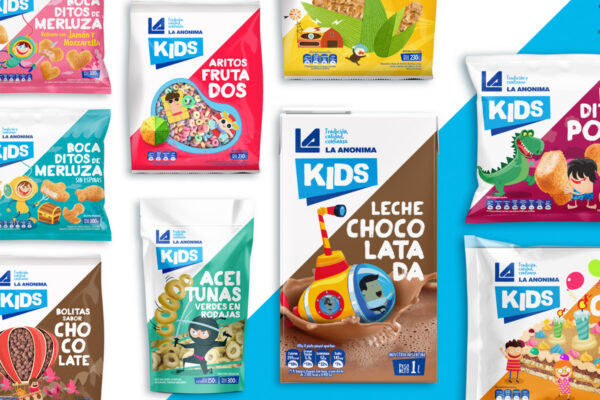
The La Anónima KIDS package design delivers humor to attract its main target while delighting parents who make the purchase decision. Each illustrated scene gives a new meaning to the product in a playful and colorful way. Design by Tridimage.
The Unforgiving Feedback Loop
Private label packaging operates without the marketing support that sustains national brands. Sales data provides immediate, direct feedback on design effectiveness. The package must communicate value proposition, ingredient transparency, usage instructions, and emotional resonance entirely through its physical presence on shelf. There’s no advertising campaign to compensate for ambiguous positioning or confusing hierarchy.
This creates rigorous discipline in design systems. Every decision about material selection, structural form, and graphic application must serve clear strategic purposes. The package itself carries the entire burden of brand communication.
As retail continues evolving toward proprietary product development, private label design represents more than cost-effective alternatives. These packages become the physical manifestation of retail strategy, translating abstract positioning into material reality that customers experience directly.