
Beauty Packaging Design for Social Commerce and Gen Z

Social commerce shifts beauty packaging into feeds. Engineers must control gloss, haze, defects, and durability while meeting barrier targets.
Digital platforms now shape discovery, preference, and conversion in beauty markets. Therefore, cosmetic containers function as protective shells and identity media. Gen Z consumers curate purchases deliberately, selecting packages that reinforce their visual narrative online.
You can also read: Optimizing Pearlescent Pigment Dispersion.
As a result, packaging teams must design for shelf performance and camera performance simultaneously. Moreover, teams must meet compatibility, barrier, manufacturability, and sustainability constraints. This dual requirement changes how engineers specify materials, surfaces, decoration, and geometry.
Identity Through Aesthetics
Consumers increasingly use beauty packaging as a social signal with commercial consequences. Specifically, engagement metrics reward distinctive products and reinforce repeat-purchase behavior. When a container looks luxurious or unconventional, it becomes a symbolic marker rather than a neutral vessel.
In addition, packaging communicates affiliation and taste through consistent cues and brand codes. For example, weight, closure sound, and tactile texture signal quality and precision. Likewise, color, gloss, and silhouette drive immediate recognition in crowded feeds.
Platform dynamics also compress decision cycles and amplify imitation effects. Nearly three-quarters of beauty buyers rely on platform recommendations, and two-thirds follow brands across networks. Consequently, repeated exposure to influencers normalizes a product’s visual signature and accelerates group adoption.
Designing for Digital Consumption
This shift forces teams to reconsider core assumptions about container development. Historically, brands competed at point of sale through shelf blocking and in-store trial. Now, brands compete in scrolling environments where attention windows collapse to milliseconds.
Therefore, designers must optimize packages for smartphone capture under inconsistent lighting and framing. First, silhouettes must read at thumbnail scale and remain legible in cluttered compositions. Next, surfaces must control glare, fingerprints, and micro-scratches under ring lights and LED panels.
However, camera-first design cannot compromise engineering fundamentals or line efficiency. Engineers still must manage migration, stress cracking, permeability, and photodegradation for sensitive formulas. Likewise, teams must respect tooling constraints, cycle time, decoration yield, and field durability.
The New Marketplace Dynamic
Digital platforms now restructure brand discovery and transaction pathways across the beauty category. Four out of five consumers discover new brands through social content and influencer ecosystems. Meanwhile, nearly half prefer to buy through these channels, and 62% convert via endorsements.
As a result, the container becomes a marketing surface that travels through networks. Each customer photo extends reach and reduces customer-acquisition costs over time. Therefore, packaging “shareability” becomes a design parameter, not an aesthetic afterthought.
These market forces also introduce new requirements for materials science and specification writing. Teams must evaluate photographic behavior alongside chemical compatibility and barrier performance. For instance, engineers should ask how a surface renders under harsh LEDs and aggressive HDR processing.
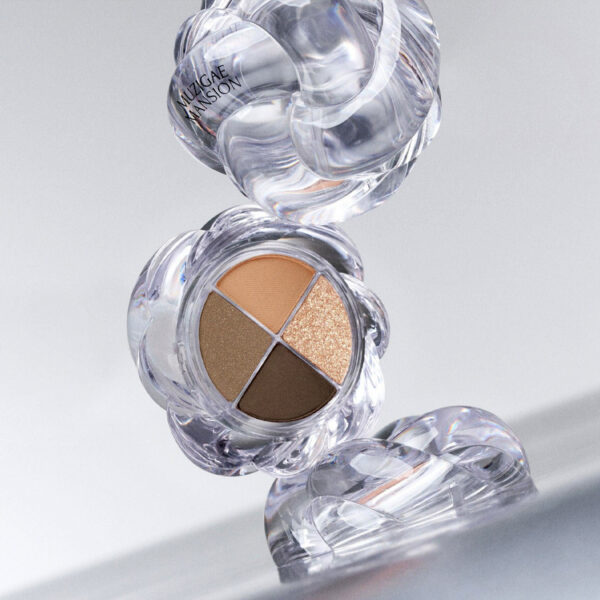
Muzigae Mansion uses consistent materials and refined detailing to build a cohesive visual language across SKUs. Design by Offof.
Engineering Photographic Performance
Packaging teams can translate camera performance into measurable engineering proxies. For example, teams can specify gloss units, haze limits, and scratch-visibility thresholds for high-touch zones. Similarly, teams can qualify color stability under standard illuminants and common LED spectra.
Decoration stacks require the same rigor because social content magnifies defects instantly. Metallization, soft-touch coatings, and pearlescent pigments can elevate perceived value quickly. However, these choices also affect recyclability, adhesion, and process windows across suppliers.
Geometry creates memory, but complex forms increase risk during molding and filling. For example, sharp transitions can increase sink, warpage, and knit-line visibility. Therefore, teams must balance novel silhouettes with robust manufacturability and dimensional control.

MDNA Skin leverages architectural forms, glossy black surfaces, and metallic finishes to create a recognizable visual signature.
Convergence of Physical and Digital
Beauty packaging now operates at the intersection of materials engineering and visual culture. Containers must preserve product performance while functioning as lifestyle signifiers and photographic subjects. The strongest designs deliver three functions at once: protection, self-expression, and shareability.
Moving forward, the industry must unify tangible and virtual requirements without inflating complexity or waste. Brands that treat packaging as infrastructure for social commerce will iterate faster and specify smarter. Ultimately, success will favor teams that design for factories and feeds simultaneously.