
Advancing Fire Performance with Flame-Retardant Fiber Reinforced Thermoplastic Composites
Fire performance of materials used in building and construction applications plays a critical role in protecting human life and limiting property damage during fire events. While traditional flame-retardant (FR) solutions—such as surface coatings, films, or laminated sheets—can improve fire resistance, they are often vulnerable to damage during handling, fabrication, and installation. These approaches may also add cost, complexity, and time to construction projects.
Conventional FR chemistries, including halogenated, phosphorus-based, nitrogen-based, and mineral-filled systems, present additional challenges. Common limitations include environmental and regulatory concerns, degradation of mechanical properties, increased part weight due to high additive loadings, and reduced long-term durability. These drawbacks have driven demand for integrated flame-retardant technologies that preserve structural performance while meeting increasingly stringent fire safety requirements.
Fiber Reinforced Thermoplastic Composites for Fire-Safe Construction
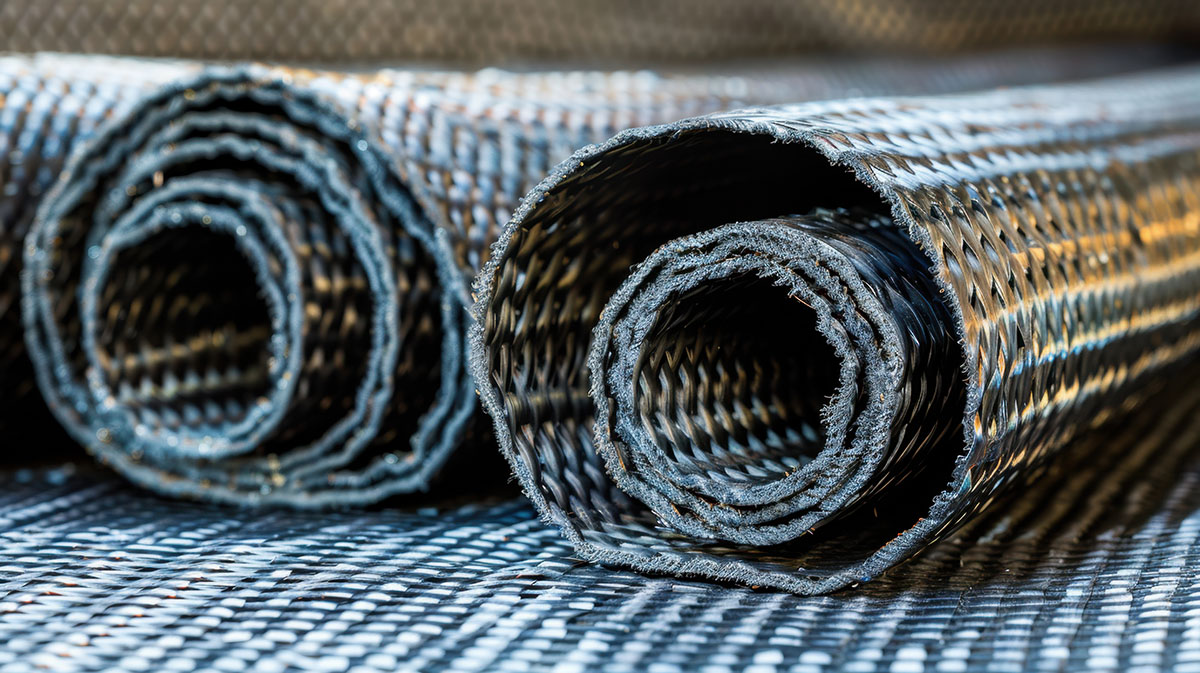
Continuous fiber reinforced thermoplastic composites offer a compelling solution for modern building and construction applications. These materials provide an exceptional strength-to-weight ratio, design flexibility, and durability, making them attractive alternatives to traditional construction materials. However, achieving high flame retardancy without compromising mechanical performance has historically been a challenge.
A newly developed embedded flame-retardant technology addresses this gap by delivering enhanced fire performance while maintaining the structural and mechanical integrity of fiber reinforced thermoplastic composites throughout their service life. This technology is integrated directly into the composite architecture and its derived sandwich panel systems (Hammerhead™ FR), eliminating the need for external coatings or secondary fire-protection layers.
Embedded Flame Retardancy with Durable Performance
By embedding the FR functionality within the composite, this drop-in flame-retardant solution simplifies manufacturing, handling, and installation—critical advantages in construction environments. The approach prevents room fire growth while ensuring consistent, long-term fire performance even after mechanical handling or installation stress.
Unlike traditional FR systems, this technology utilizes benign ingredients at low concentrations, addressing environmental concerns while avoiding the mechanical property losses often associated with high filler loadings. The result is a durable, mechanically robust composite material with built-in fire protection.
Proven Fire Performance and Low Smoke Generation
Fire testing has demonstrated superior flame retardancy and very low smoke production across multiple industry-standard evaluations. Flame-retardant composite sandwich panels achieved Class A ratings for both flame spread and smoke development in ASTM E84 (Steiner Tunnel) and ASTM E2768 testing. Additionally, the panels exhibited excellent performance in the NFPA 286 room fire test, showing minimal contribution to fire growth and measured values well below maximum threshold limits.
This level of performance represents a first-in-class achievement for thermoplastic polymer-based fiber reinforced composites, offering a new pathway for safer, lighter, and more sustainable building materials.
A New Benchmark for Fire-Safe Composite Construction Materials
By combining structural performance, environmental responsibility, and robust flame retardancy, embedded FR fiber reinforced thermoplastic composites provide an innovative solution for the building and construction industry. This technology enables engineers and designers to meet fire safety requirements without sacrificing mechanical integrity, processability, or long-term durability—setting a new benchmark for next-generation construction materials.
Navraj Heer, Research and Development Manager, Avient Corporation will be presenting this topic at ANTEC 2026. To learn more, join SPE March 9-12, 2026 in Pittsburgh, PA.