
PVA-Based Soil Stabilization for Landslide Deposits in Tibet
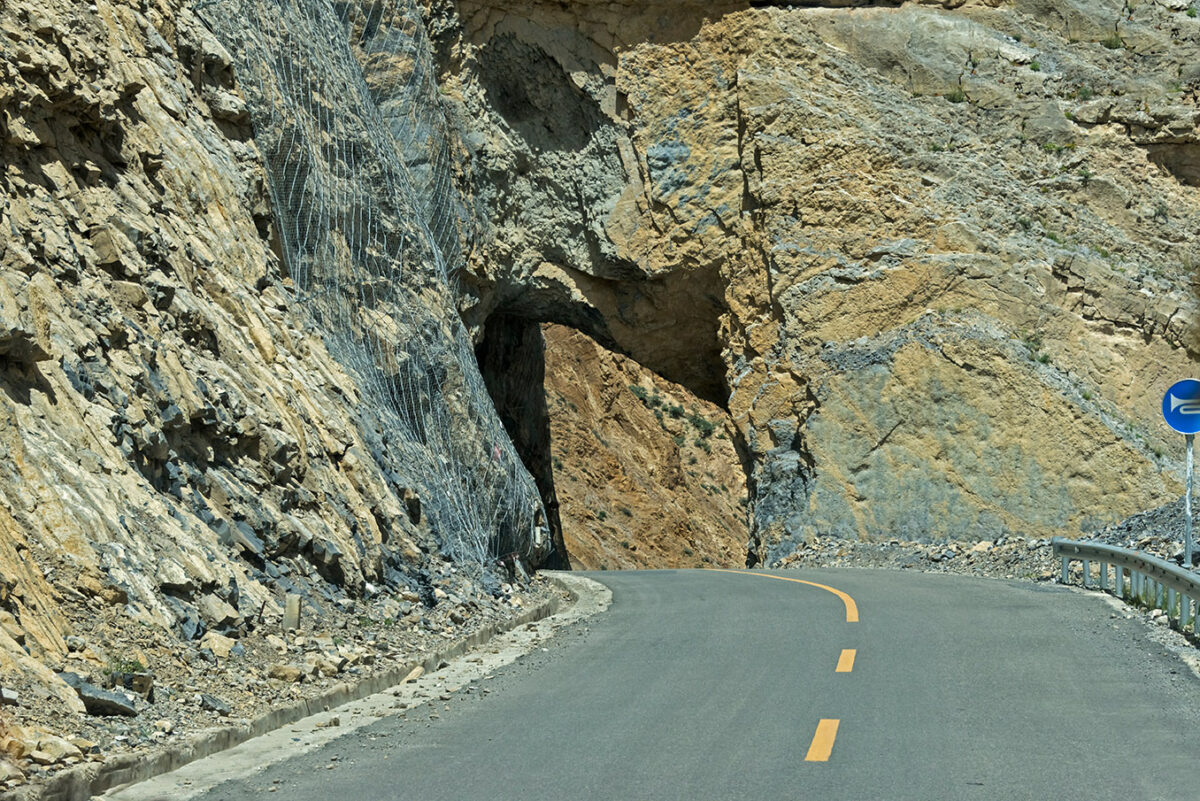
This polymer-based soil stabilization method shows potential for stabilizing landslide deposits in complex geological environments, such as southeastern Tibet.
In southeastern Tibet, high altitude, frequent seismic activity, and abundant rainfall significantly affect soil stability. These factors make the area particularly vulnerable to landslides. Landslide deposits consist of coarse-grained, mixed soils, which exhibit poor engineering properties. Physical stabilization methods are one approach for soil stabilization, but they can cause disturbances that lead to secondary landslides. Alternatively, chemical stabilization can enhance the soil’s mechanical properties through cementation, void filling, and improved particle bonding.
You can also read: Thermosetting Resin: Plugging Abandoned Oil Wells
Methods for Soil Stabilization
Cement and lime are traditional binding agents for soil stabilization. Environmental concerns regarding CO2 emissions from cement production and hydration limit cement’s usability in southeastern Tibet. Additionally, cement’s alkalinity can have adverse effects on the surrounding ecosystem. Because the Tibetan plateau region is ecologically sensitive, this factor is of even greater concern.
Polymer-based soil stabilization methods using polyvinyl alcohol (PVA) are an emerging alternative to cement binders. Incorporating supplementary materials, such as silica fume (SF), into PVA can further improve the mechanical properties of stabilized soils. The use of PVA for this application has shown promise in sandy and clayey soils. Researchers are now investigating whether this technology applies to landslide deposits with soil of mixed grain sizes. As an alternative to cement, PVA could provide remote, mountainous regions such as southeastern Tibet safer and more sustainable infrastructure.
Binding the Soil
To create a binding material for landslide deposits, researchers used PVA, SF, and polypropylene fibers. SF is a product of industrial smelting with a high silica content and significant pozzolanic activity. It can increase the strength and density of PVA-stabilized soil. The polypropylene fibers, with lengths of 10 mm, exhibit a high tensile strength.
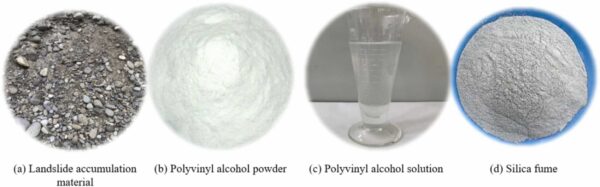
Researchers used PVA (b), accompanied by SF (d) and polypropylene fibers, to stabilize landslide accumulation material (a). Figure courtesy of Stabilization of coarse-grained mixed soils from landslide deposits in Southeastern Tibet using PVA-based composite materials: Mechanical properties and micro-mechanisms.
Researchers prepared the material using a multi-stage mixing procedure to ensure precise control and test repeatability. Then, they compacted the mixture into five layers to form cylindrical samples, which cured for seven days. The researchers subjected the samples to large-scale direct shear tests under 100, 200, 300, and 400 kPA consolidation pressure.
Increased Stability
Results of the study showed that the PVA solution altered the mechanical response of the course-grained soil. The unstabilized soils exhibited strain-hardening behavior. The addition of the PVA solution changed this behavior to strain-softening, indicating effectiveness of the PVA’s binding effect. Without the PVA binder, the samples exhibited failure from the plastic sliding of individual particles. The samples with the PVA binder, instead, exhibited brittle fracture of the entire cemented structure as the failure mode. The PVA also significantly enhanced the soil’s shear strength.
By adding SF, researchers increased the peak shear strength of the samples by 25-40%. The polypropylene fiber further improved mechanical performance, reducing the brittleness index by up to 66%.
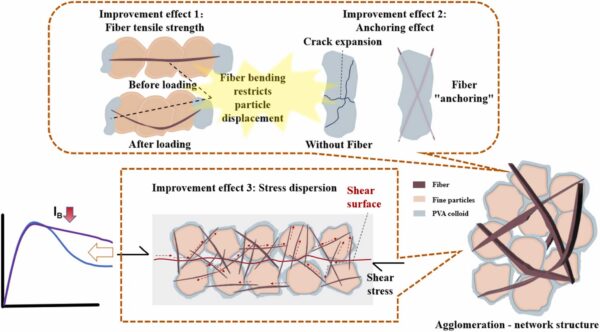
The polypropylene fibers significantly enhanced ductility and post-peak performance of the samples. Figure courtesy of Stabilization of coarse-grained mixed soils from landslide deposits in Southeastern Tibet using PVA-based composite materials: Mechanical properties and micro-mechanisms.
This study shows significant potential for soil stabilization in complex geological environments. In the field, factors such as the free-thaw cycle and seismic activity may have additional effects on this method. By using the PVA binder composite in the field, researchers can further study its potential.