
How Packaging Pictograms Shape Consumer Decisions in Seconds

These minimalist symbols guide billions of daily decisions, yet their sophisticated design process remains largely invisible to consumers.
Every day, consumers interact with hundreds of pictograms without conscious thought. A recycling symbol here, a microwave-safe icon there, a warning triangle on a chemical container. These distilled visual representations have become so seamlessly integrated into packaging design that their absence would render modern commerce nearly incomprehensible. Yet behind their apparent simplicity lies a sophisticated intersection of psychology, design theory, and engineering precision.
You can also read: Gender Bias In Design
Beyond Decoration: The Strategic Function of Pictograms
Pictograms in packaging serve a purpose far removed from aesthetic embellishment. They communicate critical information across linguistic and cultural boundaries, enabling immediate understanding in contexts where text would fail. For packaging designers, these symbols solve one of the industry’s most persistent challenges: conveying complex instructions, warnings, and product attributes in limited space while ensuring universal comprehension.
The effectiveness of a well-designed pictogram lies in its ability to transcend translation. A flame icon universally signals flammability. Crossed-out wheat stalks instantly communicate gluten-free status. This visual language becomes particularly valuable in global supply chains where products traverse multiple markets with distinct regulatory frameworks.
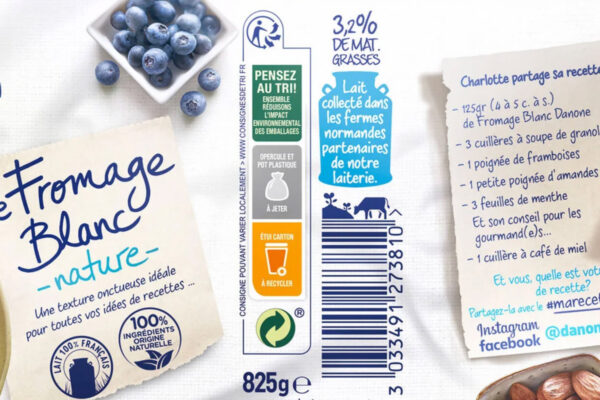
Color-coded pictogram blocks guide waste sorting behavior through layered visual hierarchy. Courtesy of Paco Arara.
The Engineering Behind Visual Clarity
Creating effective packaging pictograms demands more than artistic skill. The process begins with rigorous analysis of the core message, stripping away every non-essential element until only the fundamental essence remains. Designers must consider viewing angles, composition balance, and the interplay between positive and negative space.
Grid systems provide the structural foundation, ensuring consistency and scalability across different package sizes and materials. Line weight, spacing, and proportional relationships become critical variables that determine whether a symbol achieves instant recognition or causes dangerous confusion.
The material substrate introduces additional complexity. Pictograms must maintain legibility whether embossed on molded plastic, printed on flexible film, or laser-etched on metal containers.
Evolution and Innovation in Pictogram Design
The vocabulary of packaging pictograms continues to expand, driven by shifting consumer values and emerging product categories. Recent years have witnessed the introduction of symbols addressing previously unarticulated needs: plant-based product indicators, carbon neutrality claims, and circular economy certifications now populate package surfaces alongside traditional safety warnings and usage instructions.
This proliferation creates both opportunity and challenge. Each new symbol adds to the visual density of packaging while potentially diluting the immediate comprehension that makes pictograms effective. Designers must balance the demand for comprehensive information against the cognitive limits of at-a-glance processing. The result is an ongoing negotiation between regulatory bodies, industry stakeholders, and design professionals to determine which concepts merit dedicated pictographic representation.

Pictographic vocabulary constructs meaning beyond logistics, where everyday objects become symbolic shorthand for domestic possibility. Courtesy of Ikea.
The Human Factor
Despite technological sophistication, pictogram effectiveness ultimately depends on human cognitive processing. Symbols must trigger instant recognition while avoiding ambiguity. Testing protocols involve diverse user groups to identify cultural interpretations that might compromise clarity.
The evolution from ancient hieroglyphs to digital emoji demonstrates humanity’s enduring reliance on visual communication. In packaging, pictograms represent the contemporary expression of this timeless practice, distilling complex information into forms that speak directly to human visual processing.